Many OMS projects fail for a simple reason: the system can’t stay accurate if execution data is late, missing, or wrong.
If your operation deals with high order volume, multiple channels, or tight shipping windows, this guide will help you connect the OMS “plan” to what really happens on the warehouse floor. We’ll break down how OMS, WMS, and ERP split responsibilities—and why devices and scanning are often the difference between reliable fulfillment and daily fire drills.
What Is an Order Management System (OMS)?

An Order Management System (OMS) is software that helps businesses manage customer orders from placement to delivery and returns.
It brings order data, inventory availability, and shipping updates into one system, so teams can keep orders accurate across online stores, physical locations, and other sales channels.
In simple terms, an OMS helps make sure the right product reaches the right customer at the right time.
An OMS makes the decisions, but it doesn’t move boxes. To understand how orders really get fulfilled, we need to look at what happens on the warehouse floor.
How an Order Management System Works on the Warehouse Floor

Once an order is placed, it quickly moves beyond the website or sales channel. The OMS routes that order to the location that will fulfill it. That might be a warehouse, a distribution center, or a store that ships online orders.
Step 1: The order reaches the fulfillment team. The order shows up in the warehouse workflow with key details like items, quantities, priority, and ship-by timing. The team now knows what needs to go out and when.
Step 2: Inventory is confirmed. Before anyone starts picking, the operation needs to make sure the items are actually available. The system checks inventory records, but strong operations also verify inventory as products move. This helps prevent “in stock” situations that turn into last-minute cancellations.
Step 3: Items are picked and verified. Workers locate the products and pick them from shelves or bins. This is where accuracy matters most. A single wrong pick can create a return, a reshipment, and a frustrated customer. Many warehouses use barcode scanning during picking to confirm the correct item is matched to the correct order.
Step 4: The order is packed and prepared for shipping. After picking, items are packed, labeled, and staged for pickup or dispatch. Shipping labels and carrier details are applied at this point. As the package moves forward, the order status is updated so the operation can track progress.
Step 5: Status updates go back to the OMS and the customer. When the order ships, the OMS records the shipment and shares tracking details. Internal teams can see what’s shipped, what’s delayed, and what still needs attention. If an issue happens—like a backorder, a damaged item, or a return—the OMS helps route that exception to the right team.
This is the key idea: the OMS coordinates decisions, but the warehouse is where those decisions are proven right or wrong. That’s why execution and data accuracy matter so much once orders hit the floor.
The Role of Mobile Computers and Barcode Scanners in OMS Execution

An OMS depends on accurate, real-time data. On the warehouse floor, that data is created while work is happening—during picking, packing, shipping, and returns. Mobile computers and barcode scanners are what turn those physical actions into system updates.
During picking, barcode scanning confirms that the correct item is selected for each order. This step is easy to underestimate. Similar-looking SKUs, damaged labels, and fast-moving workflows are common sources of error. Reliable 1D and 2D scanning helps catch mistakes before they become returns or reshipments.
Scanning also creates clear checkpoints as an order moves forward. When items are picked, packed, and shipped, each scan signals that a step is complete. Without these confirmations, order status becomes unreliable. Teams lose visibility into what is actually happening on the floor.
Real-time updates matter most in high-volume environments. Inventory levels can change throughout the day. Mobile computers allow workers to update inventory and order status immediately, rather than relying on delayed or manual input. This helps the OMS make better routing and fulfillment decisions.
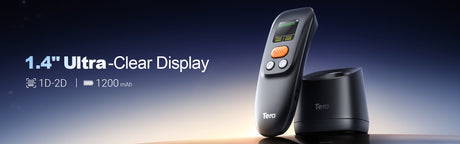
The devices themselves must fit the warehouse environment. Workers are constantly moving, scanning, and handling products. Purpose-built mobile computers, such as Android-based barcode scanner PDAs used in warehouse and logistics operations, are designed for this kind of work. Features like fast scanning, stable wireless connections, and removable batteries help support long shifts without slowing teams down.
In real-world conditions, barcodes may be damaged, devices may be dropped, and network performance can vary. Tools like Tera’s Android barcode scanner PDAs are commonly used in these environments to support consistent OMS execution across picking, packing, and inventory workflows.
The key point is simple: an OMS can coordinate and decide, but it cannot verify physical work on its own. Mobile computers and barcode scanners provide that verification, helping the system stay accurate as orders move through real warehouse operations.
When any part of this execution breaks down, the OMS quickly starts to lose accuracy. That’s where many operations begin to run into problems.
Common OMS Execution Failures (and Why They Happen)
Even with a solid OMS in place, problems still show up in daily operations. In most cases, the system is doing what it’s supposed to do. The breakdown happens on the execution side, where real work meets real-world conditions.
Below are some of the most common OMS execution failures teams run into—and why they happen.
Inventory shows “in stock,” but the shelf is empty. This is one of the most frequent issues. Inventory may look accurate in the system, but items have been moved, misplaced, or consumed without being properly recorded. When updates are delayed or skipped, the OMS keeps making decisions based on outdated information.

The wrong item gets picked. Similar-looking SKUs, damaged labels, or rushed workflows can lead to mispicks. If items aren’t verified at the moment of picking, small mistakes can slip through. Those mistakes often show up later as returns, reshipments, or customer complaints.
Orders are marked as shipped too early. In some operations, orders are marked complete before they actually leave the building. This creates false shipping confirmations and inaccurate tracking updates. From the OMS perspective, the order is done—even though it’s still sitting on a pallet.
Inventory updates lag behind reality. High-volume environments move fast. If inventory updates happen in batches or at the end of a shift, the OMS loses real-time visibility. That delay can cause over-promising, poor routing decisions, or unexpected backorders.
Returns aren’t handled consistently. Returns often follow different workflows than outbound orders. When returned items aren’t scanned or classified correctly, inventory stays out of sync. The OMS may think stock is unavailable or misjudge how quickly items can be resold.
The pattern is usually the same. The OMS makes decisions based on the data it receives. When execution steps aren’t captured accurately or consistently, the system starts working with incomplete information.
Most teams have run into these issues at some point. What often gets overlooked is how decisions, management, and execution are split across different systems.
OMS vs WMS vs ERP — What Software Can’t Do Without Hardware
Many operations use an OMS, a WMS, and an ERP at the same time. Problems usually don’t come from choosing the “wrong” system. They show up when each system’s role isn’t clear—or when execution on the floor can’t support the decisions being made.
At a high level, the difference is simple:
- OMS decides.
- WMS manages.
- Devices execute.
OMS decides. The OMS is responsible for order-level decisions. It decides where an order should ship from, how inventory is allocated across locations, and how exceptions like backorders or returns are handled. These decisions are only as good as the data the OMS receives.
WMS manages. The WMS focuses on warehouse operations. It manages inventory locations, picking paths, packing workflows, and task assignments. The WMS turns OMS decisions into organized work inside the warehouse.
Devices execute. Execution happens on the floor. Workers pick items, scan barcodes, pack orders, and move inventory. Mobile computers and barcode scanners confirm what actually happened—what was picked, when it was packed, and when it shipped. Without this confirmation, both OMS and WMS end up working with assumptions instead of facts.

Here’s how it comes together in practice. A customer places an order. The OMS decides which warehouse should fulfill it. The WMS creates picking tasks and routes them to workers. On the floor, workers use scanning devices to confirm each item as it’s picked and packed. Those scans update the systems in real time, so inventory stays accurate and order status reflects reality.
This is where hardware becomes essential. Software can plan and manage, but it cannot verify physical work on its own. Reliable mobile devices—such as Android-based barcode scanner PDAs used in warehouse operations, including models like Tera’s P166GC or P400—provide the execution layer that keeps OMS and WMS decisions grounded in what’s actually happening.
The takeaway is straightforward. OMS, WMS, and ERP each play a role, but they only work well together when execution on the floor is captured accurately. When devices fail to confirm reality, even the best software starts making the wrong decisions.
How much you need this setup depends on your operation. Some environments feel the impact of OMS execution far more than others.
Who Needs an OMS-Ready Warehouse Setup?
Not every operation needs the same level of execution support. An OMS-ready warehouse setup becomes essential when order volume, channel complexity, or accuracy requirements increase. In these environments, small execution gaps quickly turn into system-level problems.
Below are common scenarios where an OMS-ready setup makes the biggest difference.
Retail distribution centers

Retail distribution centers often support multiple stores and online channels at the same time. Inventory moves constantly between locations, and many SKUs look similar. Accuracy matters because a single mistake can affect store replenishment and online availability.
In these environments, teams rely on frequent scan confirmations during picking and packing to keep inventory aligned across channels. Handheld mobile computers and barcode scanners are commonly used to verify items as they move, helping the OMS make reliable allocation and replenishment decisions. Devices like Android barcode scanner PDAs, including models such as Tera’s P166GC, are often seen in retail DC workflows for this reason.
3PL warehouses

Third-party logistics providers handle orders for multiple customers, each with different rules, SLAs, and volume patterns. Execution errors don’t just cause delays—they can damage client relationships.
For 3PLs, real-time visibility is critical. Orders need to be confirmed at every step so status updates are accurate for both internal teams and customers. Many 3PL operations use rugged mobile computers and scanners throughout long shifts to capture picks, packs, and shipments as they happen. In practice, Android-based devices like Tera’s P400 are commonly used to support fast-moving, multi-client workflows without slowing teams down.
Manufacturing fulfillment
Manufacturing environments often combine production, storage, and outbound shipping. Orders may involve specific batches, serial numbers, or components pulled directly from the production floor.
Here, scanning is less about speed and more about traceability. Items need to be confirmed as they move from production to inventory and then to shipment. An OMS-ready setup helps ensure that what is produced, what is stored, and what is shipped stay aligned—especially when changes or rework are involved.
E-commerce operations

E-commerce fulfillment is defined by volume spikes, seasonal demand, and a high tolerance for zero errors. Temporary staff, fast onboarding, and rapid picking are common during peak periods.
In this setting, an OMS-ready warehouse relies on simple, consistent workflows supported by mobile devices. Scanning helps new workers confirm items quickly, while real-time updates keep inventory and order status accurate as volume increases. Without strong execution support, even a well-configured OMS can struggle during peak demand.
Across all of these scenarios, the pattern is the same. When execution pressure is high, systems alone are not enough. An OMS-ready warehouse setup depends on how well real-world actions are captured and confirmed as orders move through daily operations.
So what does an OMS-ready setup actually require? It comes down to a few fundamentals.
Building an OMS-Ready Operation: What to Prepare
Building an OMS-ready operation is less about adding more software and more about getting the basics right. When execution scales, these four areas determine whether your OMS stays accurate or starts to drift.
Data capture

Everything starts with how data is captured. Orders only stay accurate when actions are recorded at the moment they happen—not later, not in batches, and not from memory.
This usually means confirming key steps such as receiving, picking, packing, shipping, and returns as they occur. When data capture is delayed or inconsistent, the OMS ends up making decisions based on incomplete information. Over time, those gaps compound into inventory errors and missed commitments.
Devices
Execution depends heavily on the tools workers use on the floor. Devices need to support scanning, movement, and long shifts without getting in the way of the workflow.
In practice, many operations rely on mobile computers and barcode scanners designed for warehouse and retail environments. Android-based barcode scanner PDAs—such as models like Tera’s P166GC or P400—are commonly used to support daily picking, packing, and inventory tasks without forcing workers to return to fixed workstations.
The key is fit, not features. Devices should be easy to use, reliable under pressure, and consistent across teams and shifts.

Network
Real-time execution only works if data can move reliably. A strong OMS-ready setup requires stable network coverage across all working areas, including aisles, loading docks, and storage zones.
When connectivity drops or slows down, updates get delayed. That delay creates blind spots for both OMS and WMS decisions. Even the best workflows break down if the network cannot support real-time updates at scale.
Workforce
Finally, execution depends on people. An OMS-ready operation needs workflows that are easy to follow and tools that workers can learn quickly.
High turnover, seasonal labor, and shift changes are common in warehouse and fulfillment environments. Clear processes and intuitive devices help teams stay consistent, even when experience levels vary. When the workforce can execute confidently, systems receive cleaner data and perform more reliably.
Together, these four areas form the foundation of an OMS-ready operation. When data capture, devices, network, and workforce are aligned, OMS decisions stay grounded in reality—even as volume and complexity grow.

Conclusion
If your OMS looks right on paper but results still fall short—inventory mismatches, mispicks, late shipments, or unreliable order status—the issue is rarely the software alone. It usually comes down to how execution is supported on the warehouse floor.
Before changing systems, it’s worth checking the execution basics:
- Are pick, pack, and ship steps confirmed in real time?
- Do workers have reliable tools to scan and update orders as work happens?
- Is your network stable where orders are actually processed?
This is where execution-focused solutions matter. Companies like Tera, which focus on mobile computers and barcode scanning for warehouse and fulfillment operations, support the layer where OMS decisions turn into real-world actions.
When execution data is captured accurately and consistently, OMS platforms start making better decisions. Order accuracy improves, inventory stays aligned, and scaling becomes manageable instead of chaotic.