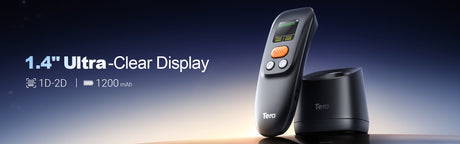
In today’s fast-paced business world, efficiency and accuracy are crucial, especially in industries like manufacturing, logistics, and healthcare. Tracking inventory, assets, and products can be challenging, especially when dealing with small items. DataMatrix scanners offer a reliable solution, providing high data density, durability, and quick scanning.
In this guide, we’ll explain what DataMatrix scanners are and how they work. We’ll also explore the different types of DataMatrix scanners and their ideal applications across industries. Next, we’ll help you choose the best scanner for your business and recommend some of the best Tera DataMatrix scanners. We’ll also cover where to buy them and the pitfalls to avoid. Finally, we’ll introduce online tools for scanning and show you how to create your own DataMatrix codes for efficient tracking.
Let’s dive in and explore how DataMatrix scanners can improve your business operations!
What Is a DataMatrix Scanner?
A DataMatrix scanner is a device used to read 2D DataMatrix barcodes. These barcodes consist of a pattern of black and white cells arranged in a square or rectangular grid. DataMatrix scanners capture images of these codes using camera modules or specialized apps on smartphones and then decode the data stored within them.
DataMatrix scanners are commonly used in industries like manufacturing, logistics, and healthcare. They are essential because they can store more data than traditional barcodes and are resistant to damage, ensuring reliable data capture even in harsh environments. They can read codes from any angle, improving efficiency in fast-paced settings.
With error correction technology like Reed-Solomon codes, DataMatrix scanners can even read damaged or partially obscured codes, making them highly reliable for tracking and inventory management.

What Is a DataMatrix Code?
A DataMatrix code is a 2D barcode made up of black and white squares arranged in a grid. Unlike 1D barcodes, which store data in one direction, DataMatrix codes store data both horizontally and vertically, allowing them to hold more information in a smaller space.
The main advantage of DataMatrix codes is their high data density. They can store a lot of information, including letters, numbers, and binary data, in a compact size. This is especially useful in industries like manufacturing, pharmaceuticals, and aerospace, where small parts need to be tracked.
DataMatrix codes are also robust. They can still be read if damaged, thanks to error correction (like Reed-Solomon error correction). This makes them ideal for environments where codes may get scratched or worn.
The finder pattern (an L-shaped structure) helps scanners locate the code. Timing patterns along the sides help with decoding, even if the code is misaligned.
DataMatrix codes can be printed on a variety of surfaces, including metal, plastic, and curved objects, making them versatile for industries such as automotive, aerospace, and healthcare.
In short, DataMatrix codes offer high data capacity, error correction, and versatility, making them ideal for reliable, durable data capture.

How Do DataMatrix Scanners Work?
A DataMatrix scanner works by capturing an image of the DataMatrix code using camera modules, industrial cameras, or even smartphone apps with dedicated scanning software. The first step involves identifying the finder pattern, an L-shaped structure that helps the scanner determine the orientation of the DataMatrix code. It also locates the timing pattern, which is essential for adjusting the code’s structure and correcting distortions during scanning.
Once the orientation is established, the scanner decodes the pattern of black and white modules (the small dark and light squares) inside the DataMatrix code. These modules represent encoded data, including numbers, letters, or even bytes of information. The scanner uses these patterns to reconstruct the original data.
Modern DataMatrix codes use Reed-Solomon error correction, which enables DataMatrix scanners to recover data even if the barcode is damaged or poorly printed. This feature ensures reliable data retrieval, even under difficult conditions like scratches or smudges.
After decoding, the scanner transmits the information to a computer, database, or another connected system for processing and storage.

Why Choose a DataMatrix Scanner Over Other Barcode Scanners?
DataMatrix scanners are known for their high data capacity and robustness, making them the preferred choice over traditional 1D barcode scanners and QR code scanners in industrial settings.
One key advantage of DataMatrix scanners is their ability to store more data in a smaller space. Unlike 1D barcode scanners, which read information from a single line, DataMatrix scanners can decode two-dimensional codes, enabling them to store a much higher volume of data in a compact area. This is especially useful for tracking small parts or products that require detailed information, such as in the manufacturing and healthcare industries.
Another significant benefit is their durability. DataMatrix scanners can reliably read codes even when they are damaged, scratched, or poorly printed. Thanks to error correction technology like Reed-Solomon error correction, DataMatrix scanners ensure data accuracy even in less-than-ideal conditions. In contrast, traditional 1D barcode scanners may fail to read damaged or distorted barcodes, leading to delays or errors.
In addition, DataMatrix scanners offer omnidirectional scanning, meaning they can read the code from any angle. This provides a major advantage in fast-paced environments, where aligning the code for a traditional 1D barcode scanner might slow down the process. Whether the DataMatrix code is placed horizontally, vertically, or at an angle, DataMatrix scanners ensure quick and efficient scanning.
When compared to QR code scanners, DataMatrix scanners offer greater reliability and are better suited for industrial environments. While QR codes are commonly used for consumer-facing applications, DataMatrix codes are designed to withstand harsh conditions. They are more resilient to damage and more reliable for tracking assets in sectors like aerospace, automotive, and pharmaceuticals.
In summary, DataMatrix scanners offer superior data density, reliability, and versatility. They are ideal for industries that need to track items efficiently, even in challenging conditions, making them a better option than traditional 1D barcode scanners and QR code scanners.

Types of DataMatrix Scanners
DataMatrix scanners come in various types, suited to different environments and needs. The main types include:
-
Handheld Scanners: Portable and easy to use, ideal for applications in warehouses, retail, or other environments where mobility is required.
-
Stationary (Fixed-Mount) Scanners: Mounted in a fixed position, these are commonly used on production lines or conveyor belts for high-volume and automated scanning.
- Mobile Device Scanners: Smartphones or tablets with dedicated scanning apps can also scan DataMatrix codes, offering flexibility for mobile use in various industries.
In terms of scanning technology, there are three main types:
-
Laser Scanners: Fast and accurate, ideal for reading linear barcodes.
-
CCD Scanners: More affordable, they capture the barcode image using light sensors and work well on challenging surfaces.
- Camera-based Scanners: These use an image sensor (like a smartphone camera) to capture 2D DataMatrix codes, providing versatility and the ability to read codes from any angle.
For environments requiring high-speed and flexible scanning, omnidirectional scanners are ideal, as they can read codes from any direction.
Applications of DataMatrix Scanners in Various Industries
DataMatrix scanners have become essential tools across a variety of industries due to their high data capacity, robustness, and versatility. Their ability to store large amounts of information in a small space makes them ideal for environments where space is limited, and quick, accurate data capture is essential. Let's explore some key industries where DataMatrix scanning technology plays a crucial role:

Manufacturing: In manufacturing, DataMatrix scanners are used for Direct Part Marking (DPM), which allows manufacturers to mark individual parts with DataMatrix codes for real-time tracking and traceability. These scanners ensure that every part is properly identified, from assembly to quality control.
Logistics: In logistics, DataMatrix scanners help streamline the movement of goods in warehouses and supply chains. They are used for inventory management, tracking packages, and ensuring that shipments are delivered accurately and on time. The omnidirectional reading feature of DataMatrix scanners ensures faster processing, even in busy environments.
Healthcare: The healthcare industry uses DataMatrix scanners to track medical devices, pharmaceuticals, and patient information. DataMatrix codes are endorsed by GS1 and ensure compliance with global standards. These scanners help prevent errors and enhance patient safety by accurately tracking critical information.
Electronics: In the electronics industry, DataMatrix codes are used for labeling small components like circuit boards, microchips, and semiconductors. Their high data density allows manufacturers to store vital information such as part numbers, batch codes, and serial numbers directly on tiny electronic parts.
In conclusion, DataMatrix scanners are widely used across industries that require accurate data capture, reliability, and space efficiency. Whether it's tracking parts on a production line or managing inventory in a warehouse, DataMatrix scanning technology provides businesses with an efficient and durable solution for their data needs.
How to Choose the Best DataMatrix Scanner for Your Business
When selecting a DataMatrix scanner, it’s essential to consider factors like scanning environment, speed, accuracy, and compatibility with existing systems. Here's what to focus on:

Barcode Type: Since DataMatrix is a 2D barcode, ensure your scanner supports 2D symbology. Some scanners can handle both 1D barcodes (like UPC or EAN) and 2D DataMatrix codes, making them more versatile for businesses with varied barcode needs.
Scanning Environment: Think about where you'll use the scanner. If it’s in a warehouse, factory floor, or outdoor environment, you’ll need a rugged scanner that can withstand harsh conditions like dust, moisture, or frequent drops.
Scanning Speed and Accuracy: For high-volume scanning, you need fast and accurate scanners. Choose one that can handle a high scanning rate without compromising on accuracy, especially in logistics or manufacturing environments.
Connectivity: Decide whether you need a wired or wireless scanner. Wireless scanners offer flexibility in moving around, especially for inventory management or mobile operations. Ensure the scanner supports USB, Bluetooth, or other connection types that suit your system.
Ease of Use: Consider how user-friendly the scanner is, especially if multiple people will be using it. Look for ergonomically designed models that are comfortable to hold for long periods and easy to operate.
Durability: Choose a DataMatrix scanner that can survive drops, shocks, and exposure to extreme temperatures. Check the IP rating to ensure the scanner is dustproof and water-resistant—important for tough work environments.
Compatibility: Make sure the scanner integrates seamlessly with your inventory management system or point-of-sale (POS) system. Check if it works with your existing software to ensure smooth data flow.
Budget: While high-end scanners offer advanced features, balance the cost with your needs. Consider long-term expenses like maintenance, support, and upgrades to ensure you stay within your budget while getting a reliable scanner.
DataMatrix Symbol Size and Quality: Consider the size and print quality of your DataMatrix codes. If you deal with small or damaged codes, ensure the scanner has strong error correction capabilities to read them accurately, even when they are printed poorly or exposed to wear.
Battery Life: If you opt for a wireless scanner, check its battery life. Long-lasting batteries are essential, especially if the scanner will be used throughout the day without frequent charging.
Best Tera DataMatrix Scanners for Your Business
Choosing the right DataMatrix scanner is key to improving your business's efficiency. Here are some of the best Tera scanners, each designed to solve specific pain points:
Tera D5100 2D Barcode Scanner: Perfect for Retail and Logistics
For high-volume scanning in retail and logistics, the Tera D5100 stands out with its 2000mAh battery for longer usage and up to 328 ft wireless range. Its anti-shock silicone protection ensures durability, and the ergonomic design makes it comfortable for extended use.
Tera P150 Android 12 PDA: Built for Rugged Warehouse Environments
The Tera P150 is ideal for warehouses and field operations, offering IP65 protection and rugged durability with the ability to withstand multiple drops. The Zebra SE4710 scan engine handles damaged or high-density DataMatrix codes, while the Android 12 system ensures smooth integration with your business systems.
Tera P161 Android 11 Scanner: Best for Multitasking in Logistics
With a 6700mAh battery and Zebra SE4750MR scanner, the P161 is designed for logistics and fieldwork. It supports NFC for easy integration, offers long-lasting battery life, and ensures quick and reliable scanning even in challenging conditions.
Tera P400 Android 11 for Warehouse Inventory: Ideal for Industrial Environments
The Tera P400 is perfect for warehouse inventory management, offering an IP67 rating for waterproofing and dustproofing. Its 5100mAh battery and HS7 scan engine ensure reliable performance, even in harsh environments like production lines.

Where to Buy DataMatrix Scanners and What to Look for in a Seller
When purchasing a DataMatrix scanner, it’s essential to choose a trusted vendor to ensure high-quality and reliable products. Tera is a reputable provider specializing in industrial-grade Android mobile terminals and DataMatrix scanners. Known for their durability and performance, Tera scanners are ideal for industries like manufacturing, logistics, and retail, providing reliable solutions to meet diverse scanning needs.
Buying Tips
Before purchasing a DataMatrix scanner, consider the following tips:
- Warranties and Customer Support: Ensure the vendor provides a solid warranty and accessible customer support. A good warranty guarantees you can get repairs or replacements if the scanner malfunctions. Additionally, check if the vendor offers technical support to help with troubleshooting. Tera offers comprehensive after-sales service, including responsive customer support.
- Pricing and Value: While it’s tempting to choose the lowest-priced option, always ensure you’re getting value for your money. Consider long-term ownership costs, including maintenance, software updates, and battery replacements. Tera offers competitive pricing with a focus on delivering durable, high-performance scanners that provide excellent value over time.
- Compatibility with Existing Systems: Confirm that the DataMatrix scanner integrates well with your current inventory management systems or point-of-sale (POS) systems. Tera scanners are designed to easily integrate with a wide range of systems, ensuring smooth operation without compatibility issues.
Common Pitfalls to Avoid
When buying a DataMatrix scanner, here are some common mistakes to avoid:
-
Ignoring Durability: Avoid purchasing scanners that are not durable enough for demanding environments. Ensure the scanner is designed to withstand drops, dust, and moisture. Look for scanners with a high IP rating for waterproofing and dustproofing. Tera scanners are built to handle tough conditions and maintain reliability over time.
-
Not Considering Future Needs: Choose a scanner that will grow with your business. Consider the potential for increased scanning volume or the need for upgrades in the future. Tera offers scalable solutions that can be easily adapted to your evolving needs.
- Not Checking Reviews and Ratings: Always check customer reviews and ratings before purchasing a scanner. These insights will help you assess the scanner's real-world performance and reliability. Tera is known for providing reliable products and exceptional customer service, ensuring that customers are satisfied with both the product and the support they receive.
In conclusion, when purchasing a DataMatrix scanner, focus on warranty, customer support, and product durability. By choosing a trusted vendor like Tera, you ensure you get a reliable, high-quality scanner that meets your business needs.
Online Tools for Scanning DataMatrix Barcodes
Online tools allow users to scan DataMatrix barcodes directly from their web browsers, providing a quick and easy way to capture data without the need for additional hardware. These tools use camera technology to capture the barcode image and decode the information.
How They Work: These web-based tools typically use JavaScript or other web technologies to interact with the camera on a computer or mobile device. When a DataMatrix barcode is placed in front of the camera, the tool automatically detects and decodes the pattern, displaying the information in real-time. These tools are easy to use and don’t require installation, making them ideal for occasional or on-the-go scanning.
Advantages and Limitations:
-
Advantages: No installation required, quick and accessible, perfect for temporary scanning tasks or occasional use.
- Limitations: Limited by the camera quality of the device, may not perform well in low-light conditions or with damaged barcodes. Also, they are less reliable for high-volume or industrial use compared to dedicated hardware scanners.
How to Make a DataMatrix Barcode?
Creating a DataMatrix barcode is a straightforward process using specialized software or online tools. Follow these steps to generate your own DataMatrix barcodes for various applications like product identification and inventory management.
Tools for Creating DataMatrix Barcodes: There are numerous online generators and software solutions available that allow users to create DataMatrix codes quickly. Some popular options include:
-
Online Barcode Generator: A free tool to generate DataMatrix codes for product labeling.
-
ZebraDesigner: Software that provides customizable barcode creation options for businesses.
- Tera's Barcode Creation Tool: A user-friendly tool designed for those using Tera devices, ensuring compatibility and ease of use.
Step-by-Step Process:
-
Choose a tool: Select an online generator or software.
-
Input the data: Enter the text, numbers, or other information you want to encode.
-
Generate the barcode: The tool will create the DataMatrix barcode and allow you to download or print it.
- Test the barcode: Always test the generated barcode with a scanner to ensure readability.
How Do Data Matrix Codes Differ from QR Codes?
- Size and Capacity: Data Matrix codes have a higher data density, meaning they can store information in a smaller physical space than QR codes. This makes them ideal for marking very small components. However, QR codes have a larger maximum data capacity overall.
- Error Correction: Both codes use powerful Reed-Solomon error correction. Data Matrix uses a fixed, high level of error correction. QR codes offer four user-selectable levels of error correction, with the highest level providing a similar degree of damage recovery as Data Matrix. Both are highly robust.
- Usage: Data Matrix codes are more commonly used in industries like manufacturing and healthcare for tracking small items and products, while QR codes are primarily used in marketing and advertising for easy access to digital content.
Ready to Boost Your Business with the Right DataMatrix Scanner?
Now that you understand the benefits and key features of DataMatrix scanners, it’s time to take the next step toward improving your operational efficiency. Whether you’re tracking small parts in manufacturing, managing inventory in logistics, or ensuring patient safety in healthcare, the right scanner can make all the difference.
Tera offers a range of high-performance DataMatrix scanners designed to meet the demands of diverse industries. With durable, easy-to-use models and powerful scanning capabilities, Tera is your trusted partner for reliable and efficient data capture.
Explore Tera’s scanners today and choose the one that’s perfect for your business needs. Start scanning smarter and streamline your operations now!