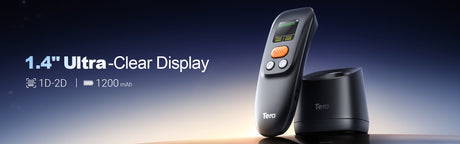
You’re in the middle of a hectic warehouse, trying to stay on top of orders. Each time you need to scan something, you have to stop, pick up the scanner, and then get back to work. It’s time-consuming and frustrating. This is where wearable scanners come in. These smart devices let you scan barcodes while keeping your hands free, so you can stay focused on your tasks without constant interruptions. In this article, we’ll dive into what wearable scanners are, their key features, and how they’re shaking things up in industries like retail, logistics, and healthcare. Plus, we’ll help you figure out how to choose the right scanner for your business and why Tera’s wearable scanners might be just what you need. And don’t worry — we’ll answer the most common questions so you can make the best decision.
Stick with us to see how these scanners can take your efficiency to the next level.
What is a Wearable Scanner? Understanding the Technology Behind It
A wearable scanner is a small device worn on the hand, wrist, or finger that scans barcodes or QR codes. Using Bluetooth or other wireless technologies, it instantly sends the scanned data to a system, allowing users to stay hands-free while performing tasks like picking, packing, or sorting. This makes it especially useful in fast-paced environments like warehouses, retail stores, and manufacturing.
Wearable scanners come in different forms, including ring, glove, and wrist-mounted types, each designed for specific tasks and comfort.

Key Features of Wearable Scanners
Wearable scanners offer a range of features that make them perfect for fast-paced work environments. These devices are designed to improve efficiency, accuracy, and mobility, all while helping workers stay hands-free. Let’s explore the key features that make wearable scanners an essential tool for businesses.
Hands-Free Operation
Wearable scanners let workers scan barcodes while keeping their hands free for other tasks like picking or packing. This makes workflows smoother and boosts overall productivity.
Increased Efficiency
By eliminating the need to stop and pick up a handheld scanner, wearable scanners speed up the scanning process. Workers can move quickly and focus on the task at hand, saving valuable time.
Reduced Errors
These scanners minimize the risk of human error in scanning and data entry. With real-time scanning, mistakes are reduced, ensuring better inventory accuracy and smoother order fulfillment.
Ergonomic Design
Lightweight and designed for comfort, wearable scanners reduce strain during long shifts. Workers can wear them for hours without discomfort, making them ideal for demanding environments.
Real-Time Data Capture
Data is captured and sent instantly to the system. This gives businesses real-time visibility into inventory, order statuses, and more, improving decision-making and operational efficiency.
System Integration
Wearable scanners easily integrate with existing systems like warehouse management software. This streamlines data flow, reduces manual work, and improves overall operational efficiency.
Improved Traceability
By simplifying data collection, wearable scanners enhance traceability across the supply chain. From receiving goods to final shipment, the process is clearer and more organized.
Enhanced Safety and Compliance
Some wearable scanners offer features like voice commands or AR guidance, helping workers follow safety protocols and workplace guidelines and improving overall compliance.
Mobility
With wireless connectivity, wearable scanners allow workers to move freely around the workspace. This flexibility boosts efficiency, especially in large or busy environments.

Applications of Wearable Scanners
Wearable scanners are transforming industries by improving efficiency, accuracy, and mobility. These devices are not limited to a single sector; they have applications across warehousing, retail, healthcare, and logistics, making work faster and more efficient.
Warehouse Operations
In warehouses, wearable scanners streamline order picking and fulfillment by allowing workers to scan items while moving, eliminating the need to stop and pick up handheld devices. This significantly reduces processing time and improves accuracy.
For inventory management, wearable scanners provide real-time tracking, helping businesses monitor stock levels and reduce the risk of stockouts. They also improve the receiving and shipping processes, ensuring goods are correctly logged and prepared for shipment.
Retail
In retail, wearable scanners improve the point-of-sale (POS) experience by enabling fast, seamless checkouts. Employees can quickly scan items, reducing wait times and enhancing customer satisfaction.
Wearable scanners also improve inventory management, providing real-time stock updates and ensuring that shelves are always stocked with the right products. Additionally, they assist in price checking, allowing staff to instantly verify prices, boosting customer service.
Healthcare
In healthcare, wearable scanners play a key role in patient identification by verifying patient information and tracking medications. This enhances safety by ensuring patients receive the correct treatment.
For lab sample tracking, wearable scanners make it easy to label and monitor samples, ensuring accurate processing. These devices also help with medical records management, enabling easy access to and updates on patient records, reducing errors, and improving efficiency.
Transportation and Logistics
In the logistics sector, wearable scanners are used for package tracking, offering real-time updates on delivery status. This enhances transparency and customer satisfaction.
They also assist in load management by improving the efficiency of loading and unloading cargo, helping businesses reduce delays. Additionally, wearable scanners are integrated with route optimization systems to ensure delivery routes are as efficient as possible.
Choosing the Right Wearable Scanner for Your Business
Selecting the right wearable scanner involves understanding your specific needs and matching them with the right features. Key considerations include the type of barcode technology you use, the ergonomics and comfort for your workers, the durability of the device in your environment, and the scanner’s connectivity and data handling capabilities. Let’s break down these essential factors:

Barcode Type and Scanning Requirements
-
1D vs. 2D Barcodes
The first step is to determine what types of barcodes you typically use. If your operations involve 1D barcodes (like UPC codes), most scanners will suffice. However, if you need to scan 2D barcodes (QR codes, Data Matrix), make sure the scanner is capable of reading both types to avoid future compatibility issues.
-
Scanning Distance and Angle
Consider the typical scanning range you need. Some scanners are designed for close-range scanning, while others excel at scanning from a distance. Choose a scanner based on your usual operational environment and the distance between the barcode and the scanner.
-
Scan Performance and Speed
If you deal with large volumes of items or need fast processing, look for a scanner with high scan speed. Some models also perform better on damaged or dirty barcodes, so if your work involves scanning items in less-than-perfect condition, make sure the scanner performs well under these conditions.
Ergonomics and User Comfort
-
Weight and Balance
For workers using wearable scanners for long hours, the weight and balance of the device matter. Look for lightweight options that are well-balanced, as this reduces fatigue and strain, making the scanner more comfortable for extended wear.
-
Wearable Options
Depending on your workflow, consider ring scanners, wrist-mounted scanners, or glove scanners. Each design has its own ergonomic benefits, so choose the one that suits your team’s tasks and preferences. For instance, wrist-mounted scanners may be more comfortable for picking tasks, while ring scanners allow hands-free operation without interfering with the worker’s grip.
-
Ease of Use
Choose a scanner with an intuitive interface and an easy-to-use trigger. Simple controls and user-friendly designs will improve adoption rates and minimize training time for your staff.
Durability and Environmental Factors
-
Ruggedness
If your workplace is demanding, look for scanners that can withstand drops, rough handling, and general wear and tear. Rugged scanners are designed to handle such environments without compromising performance.
-
Temperature and Moisture Resistance
For industries with extreme temperatures or exposure to moisture (such as in cold storage, outdoor settings, or manufacturing environments), ensure the scanner you choose is rated to handle those conditions.
-
IP Rating
Pay attention to the IP rating of the scanner. This rating indicates how resistant the device is to dust and water ingress. A higher rating ensures the scanner can handle challenging environments without failure.
Wireless Connectivity and Data Handling
-
Wireless Options
For seamless communication and real-time data transmission, choose wearable scanners with reliable wireless connectivity such as Bluetooth or Wi-Fi. This ensures the scanner can easily integrate into your existing systems, whether it's for inventory management or sales.
-
Data Processing and Storage
The scanner should be capable of quickly processing and storing data. If your business deals with large amounts of data, make sure the scanner has adequate processing speed and storage capacity to handle your needs.
-
Compatibility
Verify that the scanner is compatible with your existing software, such as warehouse management systems (WMS) or POS systems. A compatible scanner will ensure smoother integration and minimize setup time.
Battery Life and Charging
-
Battery Capacity
Choose a scanner with sufficient battery life to get through a full work shift. Depending on your operational needs, it’s important to select a scanner that can last through the day without frequent charging interruptions.
-
Charging Options
Consider the charging options available for the scanner. Some devices offer quick charging capabilities or come with spare batteries to ensure minimal downtime during operations.
Cost and Warranty
-
Total Cost of Ownership (TCO)
Don’t just look at the initial price—consider the total cost of ownership over the scanner’s lifespan. This includes maintenance costs, repairs, accessories, and any additional software required to integrate the device into your systems.
-
Warranty and Support
Choose a scanner that comes with a strong warranty and reliable technical support. A solid warranty ensures that your investment is protected, while responsive customer service can help address any issues quickly, minimizing downtime.
By carefully considering these factors, you can select a wearable scanner that enhances your business operations, boosts productivity, and delivers a better user experience. A well-chosen scanner will not only meet your current needs but also provide long-term value, ensuring your team operates at peak efficiency.

Why Choose Tera’s Wearable Scanners?
Tera’s wearable scanners are designed to meet the needs of businesses looking to improve efficiency, reduce errors, and enhance workflow in fast-paced environments like logistics, retail, and healthcare. Here’s why Tera’s wearable scanners are the right choice:
Reliable and Versatile Connectivity
Tera’s wearable scanners, including the HW0011 CCD 1D Ring Barcode Scanner and HW0010 2D Barcode Scanner, offer 3-in-1 connectivity options: Bluetooth, 2.4GHz wireless, and USB wired. This versatility ensures seamless integration with a variety of devices, such as PCs, POS systems, tablets, and more. No matter where your operations take place, Tera’s scanners ensure smooth connectivity and help eliminate disruptions caused by connection issues.
Superior Scanning Performance
Tera’s scanners are equipped with powerful scanning capabilities. The HW0010 can read both 1D and 2D barcodes, including QR codes, while the HW0011 focuses on 1D barcode scanning. These scanners are designed to handle a wide range of barcodes, whether they’re on labels, paper, or screens, ensuring accurate data capture and reducing errors that can disrupt inventory management and order processing.
Hands-Free Operation to Maximize Efficiency
Tera’s wearable ring design allows workers to keep their hands free while scanning barcodes, enabling them to perform tasks like picking, packing, and sorting without interruption. The lightweight design and ergonomic fit provide comfort during long shifts, making Tera’s scanners ideal for environments where productivity and multitasking are essential.
Long Battery Life for All-Day Use
Tera’s wearable scanners come with high-capacity batteries that ensure they can last through long shifts without needing frequent charging. The HW0011 features a 400mAh battery, offering more extended working hours compared to other scanners. With two upload modes, including instant upload and storage mode, workers can scan and store up to 50,000 barcodes, ensuring productivity without interruptions.
Built for Comfort and Durability
Tera’s wearable scanners are built to endure the demanding conditions of warehouses, retail floors, and outdoor environments. With rugged construction, the HW0010 and HW0011 are resistant to drops, moisture, and dust. Additionally, their ergonomic design minimizes strain, allowing workers to wear the devices comfortably for extended periods without fatigue.
Easy Setup and Multi-Language Support
With plug-and-play functionality, Tera’s wearable scanners require no additional software or complicated setup. This makes them ideal for businesses that need to minimize downtime and get up and running quickly. Moreover, the HW0010 and HW0011 offer multi-language support, making them adaptable for global businesses with diverse workforces.
Proven Performance Across Industries
Tera’s wearable scanners are already trusted in logistics, retail, healthcare, and manufacturing industries. Whether you’re tracking inventory in a warehouse, improving customer service in retail, or managing patient data in healthcare, Tera’s scanners are built to handle the demands of these environments, enhancing efficiency and reducing operational errors.
Tera’s wearable scanners combine advanced technology, comfort, and long-lasting durability, making them the perfect choice for businesses aiming to streamline operations, reduce errors, and improve overall productivity. With Tera, you get a reliable solution that supports your team and ensures smoother workflows.
How to Use Tera’s Wearable Scanner (HW0010 2D Barcode Scanner)
Using the Tera HW0010 2D Barcode Scanner is simple and efficient. Follow these quick steps to start scanning and make your workflow more productive:
Connecting Your Wearable Scanner
The HW0010 offers 3-in-1 connectivity options: Bluetooth, 2.4GHz wireless, and USB wired. Choose the connection method that best suits your setup and follow the pairing steps for Bluetooth or simply plug it in via USB for immediate use.
Scanning Barcodes
Once connected, wear the HW0010 as a ring scanner. Point the scanner at the barcode, and it will automatically detect and decode 1D and 2D barcodes (including QR codes). The scanner’s hands-free design allows you to perform other tasks simultaneously, improving efficiency.
Switching Modes
Choose between Instant Upload Mode for real-time data transfer or Storage Mode to store up to 50,000 barcodes and upload them later. These modes offer flexibility depending on your operational needs.
Customizing Your Scanner
The HW0010 allows for prefix and suffix setup to add custom data to scanned barcodes. You can also adjust volume and vibration settings for feedback based on your environment.
Charging and Maintenance
For optimal performance, ensure the scanner is regularly charged. The HW0010 has a long-lasting battery that can handle full shifts, and its sleep mode helps conserve energy when idle.
This simple guide covers the key features of Tera’s wearable scanner (HW0010 2D Barcode Scanner) to help you get started quickly and boost productivity.

Common Questions About Wearable Scanners
When considering wearable scanners for your business, you may have important questions about their performance, compatibility, and how they can improve your workflow. Here are some of the most common queries that businesses typically have when evaluating wearable scanners:
How do wearable scanners improve efficiency in warehouses?
Wearable scanners allow workers to scan barcodes hands-free while performing tasks like stock picking, packing, and inventory management. This increases productivity by eliminating the need to stop and pick up a handheld scanner, making the process faster and reducing human errors.
What industries benefit the most from wearable scanners?
Industries such as logistics, retail, healthcare, and manufacturing benefit the most from wearable scanners. These sectors require fast, accurate scanning for inventory management, order fulfillment, and patient tracking, which wearable scanners enable without disrupting workflow.
Can wearable scanners read barcodes from a screen?
Yes, Tera’s wearable scanners, like the HW0010, are equipped with CMOS imaging technology, allowing them to read barcodes from LED screens, smartphones, and other digital displays. This is particularly useful in environments where barcodes are presented digitally rather than on physical labels.
How does data storage work with wearable scanners?
Tera’s wearable scanners offer two upload modes:
-
Instant Upload Mode: Data is transmitted to the system in real-time after each scan.
- Storage Mode: When the scanner is disconnected, scanned barcodes are saved in the memory and can be uploaded later. This is useful in situations where connectivity is temporarily unavailable.
Can wearable scanners be customized to fit specific business needs?
Yes, Tera’s wearable scanners offer customizable settings, such as adding or hiding prefixes and suffixes to scanned barcodes. You can also adjust scan preferences based on your workflow, making it easier to integrate the scanner into your system and improve data accuracy.

Ready to Streamline Your Operations with Tera’s Wearable Scanners?
If you're looking to improve efficiency, accuracy, and productivity in your business, Tera's wearable scanners are the ideal solution. Whether you're in warehouse management, retail, healthcare, or logistics, our scanners offer the hands-free operation, durability, and real-time data capture that businesses need to stay competitive.
Don't wait to transform your workflow. Contact Tera today to learn more about how our wearable scanners can help your team operate at peak performance.