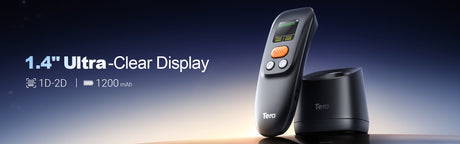
Inefficient checkout processes, frequent inventory mistakes, and slow data entry are common problems that hurt business performance. In many cases, these issues come down to using the wrong barcode scanner or outdated scanning technology.
A modern barcode scanner can do much more than just read product labels. With the right device, such as an Android barcode scanner or a rugged mobile computer with integrated scanning, you can capture data instantly, sync it to your system in real time, and work efficiently across retail, warehousing, logistics, manufacturing, and healthcare operations.
In this complete guide, you will learn exactly what a barcode scanner is, how it works, the different types available, and the benefits they bring to your business. You will also discover the latest trends and features to look for so you can choose the best barcode scanner to eliminate errors, speed up workflows, and keep your business competitive.
What Is a Barcode Scanner and How It Powers Mobile Computer and Android Solutions
A barcode scanner (also called a barcode reader, POS scanner or price scanner) is a hardware device that captures and decodes printed or digital barcodes into usable data for a computer system. It translates the pattern of black and white elements in a barcode into letters or numbers and sends that information to a POS system, inventory software or database. This process allows fast, accurate and automated data entry in everyday business operations.
Barcode scanners can be found in multiple forms such as handheld units, fixed mount devices and wearable scanners. Traditional models often use laser beams, CCD sensors or image based technology to read barcodes.
Modern business environments increasingly require mobility and flexibility. This is where integrated devices like mobile computers and Android barcode scanners are transforming operations. A barcode scanner Android device combines high speed scanning with on board business applications. It can process data in real time, connect wirelessly to enterprise systems and be used in diverse environments including retail checkout, warehouse picking, manufacturing quality control and healthcare patient tracking.
By selecting the right barcode scanner type and platform, such as an Android powered mobile computer, businesses can improve productivity, reduce errors and maintain accurate records while meeting the demands of fast moving industries.

How Does a Barcode Scanner Work for Mobile Computers and Android Devices
A barcode scanner works by capturing the visual pattern of a barcode and converting it into digital information that a computer system can process. Although the underlying process is similar across devices, the exact method depends on whether the scanner is a traditional 1D laser unit, a 2D imager, or an Android barcode scanner integrated into a mobile computer.
General Scanning Workflow
- Illumination: The scanner projects light onto the barcode using a laser beam, LED light, or an imaging sensor with built-in illumination.
- Reflection: White areas reflect more light back to the sensor while black areas absorb light. This contrast forms the barcode’s pattern.
- Detection: The sensor captures the reflected light or image and records the pattern.
- Decoding: A built-in or external decoder translates the captured pattern into readable data such as numbers, text, or embedded instructions.
- Data Transmission: The decoded data is sent to a connected system via USB, Bluetooth, Wi-Fi, or other communication methods.
How a 1D Barcode Scanner Works
- Uses a single horizontal line of light to detect the alternating bars and spaces in linear barcodes such as UPC or EAN.
- Laser scanners rely on mirrors and photodiodes to measure light variations.
- CCD scanners use arrays of light sensors for higher durability.
- Typically used in retail checkout, simple inventory management, and environments where only basic product codes are needed.
How a 2D Barcode Scanner Works
- Captures an entire image of the barcode, which may include QR codes, Data Matrix, or Aztec codes.
- Uses camera-like sensors to interpret multi-directional patterns that hold more complex data.
- Can scan from any angle and read barcodes displayed on screens, making them ideal for mobile payments, ticketing, and healthcare wristbands.
How an Android Barcode Scanner Works
- Found in barcode scanner Android devices and mobile computers, these scanners combine 2D imaging technology with an Android operating system.
- The integrated scanner captures barcode data instantly and passes it directly into business apps such as POS software, warehouse management systems, or ERP platforms.
-
Benefits include:
- Real-time data syncing via Wi-Fi or cellular networks
- The ability to run multiple apps for order processing, inventory checks, and customer service
- Enhanced mobility for warehouse staff, retail associates, and field service teams
Factors Affecting Scanning Performance
- Quiet Zone: A clear space around the barcode that ensures accurate reading.
- Contrast: Sufficient difference between the dark and light elements is necessary.
- Distance and Angle: Scanners have optimal ranges and orientations for reading.
- Surface Quality: Scratches, smudges, or glare from glossy materials can interfere.
- Lighting Conditions: Excessive ambient light or low lighting can impact performance unless the scanner is designed for such conditions.
With an understanding of these processes and factors, businesses can choose between traditional scanners, 2D imagers, or Android-based mobile computers to match their operational needs.

Key Components of a Barcode Scanner for Mobile Computers and Android Devices
A barcode scanner, whether it is a traditional handheld unit or an Android barcode scanner integrated into a mobile computer, is made up of several critical components. Each part plays a role in capturing, decoding and transmitting barcode data accurately and efficiently. Understanding these components can help businesses choose devices that match their operational requirements in retail, warehousing, manufacturing and healthcare.
Light Source
- Provides the illumination needed to read the barcode.
- Laser and CCD scanners use red LED or laser light to detect contrast between dark bars and light spaces.
- 2D image-based scanners may rely on ambient light or built-in LED lighting to capture an image.
- In rugged mobile computers, the light source is optimized for challenging environments such as low light warehouses or outdoor locations.
Lens
- Focuses the reflected light or captured image onto the scanner’s sensor.
- Determines the clarity and precision of the image, which directly affects scan accuracy.
- Industrial-grade lenses in Android mobile computers are designed for reading small or high-density codes (X-dimension as low as 3 mil) even on damaged or curved surfaces.
Sensor
- Detects the light pattern or captures the image of the barcode.
- Laser scanners use photodiodes, CCD scanners use an array of light sensors, and 2D imagers use camera-based CMOS sensors.
- High-performance sensors in mobile computers enable scanning from long distances, useful for high shelving in warehouses.
Decoder
- Translates the captured light or image data into alphanumeric information.
- Can be built into the scanner or external to it.
- Recognizes different symbologies including UPC, EAN, Code 128, QR codes and Data Matrix.
- In Android barcode scanners, the decoder can integrate directly with business applications for instant processing and validation.
Communication Interface
- Transfers decoded data to a connected system.
- Options include USB, RS232, Bluetooth, Wi-Fi or proprietary RF connections.
- Mobile computers often feature multi-mode connectivity, allowing staff to switch between Wi-Fi in the warehouse and cellular networks in the field.
Trigger Mechanism
- Initiates the scanning process.
- Can be a physical button, a touchscreen command, or automatic sensing when a barcode is in view.
- In wearable scanners, triggers may be integrated into rings or gloves for hands-free operation.
Power Supply
- Wired scanners draw power from the host device.
- Wireless scanners and mobile computers rely on rechargeable batteries.
- High-capacity batteries in industrial Android devices can last a full shift or more, with fast-charging options to reduce downtime.
Housing and Durability
- Protects internal components from dust, water, impact and extreme temperatures.
- Industrial scanners and rugged mobile computers often carry IP65 or IP67 ratings and can withstand multiple drops from 1.8 meters or higher.
- Essential for manufacturing plants, outdoor logistics hubs and healthcare environments where cleaning and disinfection are required.
By understanding these components, decision-makers can better evaluate whether they need a basic desktop barcode scanner, a rugged Android mobile computer with advanced imaging capabilities, or a specialized device for high-volume industrial use.

Types of Barcode Scanners for Mobile Computers and Android Devices
Barcode scanners differ in form factor, scanning technology, connectivity, and the industries they serve. Understanding these categories helps businesses select devices that meet their specific operational needs, whether that means a simple handheld unit for a retail checkout counter or a rugged Android barcode scanner integrated into a mobile computer for warehouse and logistics work.
By Form Factor
Handheld Barcode Scanners: Handheld barcode scanners are the most familiar design and are widely used in retail checkouts, small offices, and basic inventory management. They are straightforward to operate, come in both wired and wireless versions, and offer reliable point-and-scan performance for everyday transactions.
Mobile Computers with Barcode Scanners: Mobile computers with integrated barcode scanning offer a more advanced and versatile solution. Often running on Android, these rugged devices combine high-speed scanning with the ability to run business applications such as POS systems, warehouse management software, and order tracking tools directly on the device. They are particularly valuable in warehouses, logistics centers, and on retail store floors where mobility, real-time data, and application integration are essential.
Fixed-Mount Barcode Scanners: Fixed-mount barcode scanners are designed for automated, high-speed scanning in environments where products pass by on conveyor belts or assembly lines. They are commonly used in manufacturing facilities, distribution hubs, and self-service kiosks, providing continuous operation without manual handling.
Wearable Barcode Scanners: Wearable barcode scanners, such as ring scanners and glove-based models, allow users to keep both hands free while scanning items. This design accelerates tasks like picking, packing, and sorting in high-volume warehouse environments, making them popular in e-commerce fulfillment and large-scale logistics operations.
By Scanning Technology
Laser Barcode Scanners: Laser barcode scanners use a focused beam of light to read 1D barcodes quickly and accurately, even from longer distances. They are a staple in retail environments where speed and efficiency at the checkout counter are essential.
CCD Barcode Scanners: CCD (Charge-Coupled Device) scanners use an array of light sensors to capture barcode data with high accuracy and durability. Their solid-state design makes them more resistant to damage than laser scanners, which is why they are common in manufacturing and other rugged environments.
Image-Based Barcode Scanners (2D Imagers): Image-based scanners capture a complete image of a barcode and can decode both 1D and 2D formats such as QR codes and Data Matrix. They can read from any angle and scan codes displayed on smartphone screens, making them ideal for mobile payments, ticket validation, and healthcare applications.
3D Barcode Scanners: 3D barcode scanners create a three-dimensional image of a barcode, allowing it to be read from multiple orientations. They are often used in industries like aerospace and automotive manufacturing, where parts may have complex shapes.
CGI Barcode Scanners: CGI barcode scanners are designed for reading barcodes on curved surfaces such as bottles, cans, or pipes. They are widely used in the food, beverage, and pharmaceutical industries.
By Connectivity
USB Barcode Scanners: USB barcode scanners provide a stable, plug-and-play connection to POS terminals, desktop computers, and laptops. They are dependable, cost-effective, and widely used in retail shops and small office inventory systems.
Bluetooth Barcode Scanners: Bluetooth barcode scanners offer wireless flexibility, allowing store associates, warehouse workers, and field service teams to scan items without being tethered to a workstation. They pair easily with Android mobile computers, tablets, and smartphones for portable, app-integrated scanning.
Wi-Fi Barcode Scanners: Wi-Fi barcode scanners enable real-time data transmission, making them ideal for large warehouses, hospitals, and retail operations that require constant inventory updates. When combined with Android-based mobile computers, they can sync directly with backend systems for instant processing and reporting.
By Industry and Application
Retail and Grocery: In retail and grocery settings, handheld barcode scanners and presentation scanners streamline checkout, while Android mobile computers help manage inventory and restocking tasks.
Manufacturing: Manufacturing facilities often use rugged fixed-mount or handheld scanners for assembly line tracking, quality control, and reading DPM (Direct Part Marking) codes on components.
Government and Public Services: Mobile computers with barcode scanning are used for ID verification, ticketing, and asset tracking in government offices, public transport, and event venues.
Healthcare: Hospitals and clinics rely on 2D image-based scanners for scanning patient wristbands, tracking medication, and managing lab specimens to ensure safety and accuracy.
Warehousing and Logistics: Warehouses and logistics hubs deploy wearable scanners and long-range handheld models for high-shelf inventory scanning, order picking, and cross-docking operations.
Transportation and Ticketing: In transportation, fixed-mount and handheld Android scanners are used for boarding gates, toll booths, and parking access control, providing fast, contactless processing.

Advantages and Disadvantages of Barcode Scanners
Barcode scanners, from handheld models to Android mobile computers, offer clear benefits but also have certain limitations. Here are the main points to consider.
Advantages of Barcode Scanners
-
High Speed Data Capture: Barcode scanners process information in a fraction of a second, which speeds up checkout lines in retail stores and accelerates inventory operations in warehouses.
-
Enhanced Accuracy: By eliminating manual data entry, scanners reduce human error rates to nearly zero. This is essential for tasks such as medication tracking in healthcare or quality control in manufacturing.
-
Real-Time Data Updates: Modern devices, especially Android barcode scanners and mobile computers with barcode scanning, can transmit data instantly over Wi-Fi or cellular networks, keeping inventory and sales records up to date.
-
Durability for Demanding Environments: Rugged models often feature IP65 or IP67 protection ratings, drop resistance, and the ability to operate in extreme temperatures, making them suitable for industrial and outdoor use.
- Long-Term Cost Efficiency: The combination of faster workflows, fewer errors, and reduced labor requirements can lead to significant cost savings over time.
Disadvantages of Barcode Scanners
-
Line of Sight Requirement: Most barcode scanners require a clear view of the barcode, which can be a limitation compared to RFID systems that do not require direct alignment.
-
Vulnerability to Barcode Damage: Damaged, smudged, or low-contrast barcodes may not scan properly, causing delays and rework.
-
Color and Surface Limitations: Certain color combinations and reflective surfaces can interfere with barcode readability, though advanced image-based and Android scanners perform better in these conditions.
- Higher Initial Investment for Advanced Models: Rugged mobile computers and high-performance Android barcode scanners can cost more upfront than basic handheld models, although their long-term benefits often outweigh the initial price.
Android Barcode Scanner and Mobile Computer Troubleshooting
Even high-performance devices such as Android barcode scanners and rugged mobile computers with integrated scanning can encounter reading issues in daily operations. Understanding the most common problems and knowing how to fix them ensures smooth workflows in retail, manufacturing, logistics, and other industries.
1. Unable to Scan Barcodes from Screens
Older laser-based scanners often fail to read barcodes displayed on smartphone or tablet screens because of glare, pixel density, or polarization.
Solution: Use a 2D image-based barcode scanner for Android devices that is optimized for digital displays, and adjust the screen brightness for better contrast.
2. Blurry or Damaged Barcodes
Labels with scratches, smudges, or poor print quality may cause scan errors even on advanced mobile computers.
Solution: Reprint the barcode using high-resolution label printers, and protect labels with a transparent cover or laminate to prevent wear.
3. Very Small or High-Density Barcodes
Standard scanners may struggle with barcodes that have very fine lines (low X-dimension).
Solution: Select a high-density Android barcode scanner or configure your mobile computer’s scanning app to handle small barcodes.
4. Reflection and Glare on Labels
Glossy surfaces can cause reflections that confuse the scanner’s optics.
Solution: Tilt the scanner slightly to reduce glare or use matte-finish labels to improve readability.
5. Low Contrast Between Bars and Background
Poor color contrast (e.g., red bars on white background) can make barcodes hard to read.
Solution: Print barcodes in high-contrast combinations such as black on white, and avoid metallic inks that cause light interference.

1D Barcode Scanner vs. 2D Barcode Scanner: What’s the Difference?
1D and 2D barcode scanners have different functionalities and applications. While 1D scanners read linear barcodes, 2D scanners can decode more complex matrix barcodes.
1D Barcode Scanners
1D barcode scanners are designed to read traditional linear barcodes, such as UPC and EAN codes. These barcodes store limited data, typically a few digits or characters.
- Laser Scanners use a laser beam to scan the barcode, suitable for longer-distance scanning but cannot read barcodes on electronic screens.
- CCD Scanners use multiple light sensors to capture reflected light. They are slower than laser scanners but can read barcodes displayed on electronic screens and are more durable.
2D Barcode Scanners
2D barcode scanners are designed to read matrix barcodes, such as QR codes, Data Matrix, and Aztec codes. Unlike 1D barcodes, 2D barcodes store data in both horizontal and vertical directions, allowing for much higher data capacity.
2D scanners use image sensors or cameras to capture the full image of the barcode, decoding complex 2D information like text, links, and images. These scanners are more versatile than 1D scanners and can handle a broader range of data.
Key Differences
|
Feature |
1D Barcode Scanner |
2D Barcode Scanner |
|
Barcode Type |
Linear (1D) |
Matrix (2D) |
|
Data Storage |
Limited (numeric, product codes) |
High capacity (text, links, images, payment info) |
|
Scanning Technology |
Laser or CCD (light sensors) |
Camera-based or 2D sensor (image capture) |
|
Data Capacity |
Low (simple, numeric data) |
High (complex data, including multimedia) |
|
Common Uses |
Retail, logistics, inventory |
Digital payments, marketing, ticketing |
|
Device Compatibility |
Works with traditional POS systems |
Compatible with smartphones, tablets, modern POS systems |
1D barcode scanners are best for quickly scanning simple linear barcodes, while 2D barcode scanners can handle more types of barcodes, store more data, and support more complex applications like digital payments and marketing.
Selecting the Right Barcode Scanner for Your Needs
Not all barcode scanners are alike. Choosing the right one depends on your needs. Ask these questions before buying.
Where will you use it? (Retail, warehouse, logistics, healthcare?)
Do you need a wired or wireless model? (USB, Bluetooth, or 2.4G RF?)
Will you scan 1D or 2D barcodes? (UPC, EAN, QR codes, Data Matrix?)
Do you need an industrial-grade scanner? (Dustproof, waterproof, impact-resistant?)
Once you've answered these questions, it's time to choose a reliable brand. Tera is a trusted name in barcode scanning technology, offering a range of high-performance scanners for different industries.
Top Tera Barcode Scanners for Your Business
Tera 8100DPM Pro – Ultimate Industrial Barcode Scanner
Supports DPM (Direct Part Marking) scanning—perfect for manufacturing, aerospace, and automotive industries.
High-Precision 1-Megapixel Sensor—reads barcodes as small as 3 mil (0.003 inches), making it ideal for tiny, damaged, or worn codes.
IP67-Rated Waterproof & Dustproof—built for tough environments like factories and warehouses.
3-in-1 Connectivity—Bluetooth, 2.4G wireless, and USB for seamless data transfer.
Tera HW0016 UHF RFID Scanner – Advanced RFID & Barcode Scanning
Dual Scanning Capabilities—reads both 1D/2D barcodes and UHF RFID tags.
Wireless Long-Range Scanning—2.4GHz RF technology allows scanning up to 100 meters in open spaces.
5000mAh Battery with Charging Cradle—ensures extended scanning time for inventory tracking, logistics, and retail applications.
High-Performance Global Shutter Sensor—accurately reads blurry, damaged, or low-contrast barcodes.
Why Choose Tera?
Trusted Worldwide – Used in industries like retail, logistics, manufacturing, and healthcare.
Durability & Precision – Built to handle high-volume scanning with minimal errors.
Versatile & Future-Proof – Supports both traditional barcodes and modern QR codes.
Searching for the ideal barcode scanner for your business?
Tera’s barcode scanners deliver the perfect blend of speed, accuracy, and durability—ensuring seamless operations in any industry!
The Future of Barcode Technology: What’s Next?
Barcode scanning is evolving rapidly, bringing more efficiency and convenience to businesses. Here are the main trends influencing its future:
RFID Integration – Smarter Inventory Tracking
RFID (Radio Frequency Identification) is enhancing traditional barcode systems by allowing faster, contactless scanning. Unlike standard barcodes, RFID doesn't need direct sight and scans multiple items simultaneously. This is particularly useful for warehouses, logistics, and retail where speed and accuracy are critical.
Smartphone-Based Barcode Scanning – A Cashier-Free Future?
With mobile barcode scanning, customers and employees can use smartphone cameras to scan items, reducing the need for bulky scanners. This trend is driving self-checkout systems and enhancing in-store shopping experiences.
Cloud-Based Barcode Systems – Instant Data Access
More businesses are adopting cloud-based barcode scanning solutions to store and manage data in real time. This allows for:
Remote inventory tracking
Faster order processing
Seamless integration across multiple locations
As barcode technology advances, businesses that invest in modern scanning solutions like Tera’s high-performance barcode scanners will gain a competitive edge in efficiency and accuracy.
Final Thoughts: Why Barcode Scanners Matter
Barcode scanners are essential tools for businesses big and small. They save time, reduce errors, and make inventory management effortless. Whether you're a store owner, warehouse manager, or medical professional, choosing the right barcode scanner can boost efficiency and accuracy.
If you need a reliable scanner, Tera's barcode scanners offer high performance, durability, and advanced scanning technology.
Check out Tera's barcode scanners today and streamline your workflow!