In fast-paced environments like warehouses, retail stores, and logistics centers, scanning errors and slow barcode processing can lead to costly delays and frustrated teams. Choosing the right wireless 2D barcode scanner and knowing how to use it effectively can significantly improve efficiency.
This guide explores the best scanner models for inventory and retail operations, highlights the must-have features that truly matter, and walks you through essential setup and configuration tips to get started smoothly. You’ll also learn proven methods for using your scanner to its fullest potential, including pairing, scanning modes, offline storage, and troubleshooting.
We’ll compare wireless and wired scanners to help you decide which fits your workflow best, and outline key factors to consider before buying. Finally, we introduce specialized options, like wearable scanners and rugged industrial models, so you can confidently find the right solution for even the most challenging scanning tasks.
Best Wireless 2D Barcode Scanners for Inventory and Retail Operations

Finding the best wireless 2D barcode scanner for inventory or retail work can make a huge difference in speed and accuracy. Tera offers three excellent options for different needs: the D5100 for everyday scanning, the HW0008 for inventory-focused tasks, and the CS7219i-BT for industrial use.
Tera D5100 Wireless 2D Barcode Scanner
If you need a durable and long-lasting scanner for daily use, the Tera D5100 is a solid choice. It has a 2000mAh battery for extended shifts and features an anti-shock silicone cover for drop protection. The ergonomic grip makes scanning easy. It reads a wide range of 1D and 2D barcode symbologies and supports both wireless and wired connections.
Tera HW0008 Wireless 2D Barcode Scanner with Cradle
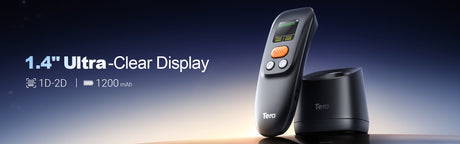
The Tera HW0008 is perfect for inventory management. Its unique counting screen tracks your scans, reducing mistakes during stock checks. The charging cradle keeps it powered all the time. You can customize prefixes and suffixes for specific barcodes, making it ideal for complex warehouse operations.
Tera CS7219i-BT Industrial Wireless Barcode Scanner
For tough conditions or large facilities, the Tera CS7219i-BT stands out. It runs on a 2600mAh battery and supports Bluetooth, 2.4G wireless, and USB wired connections. This industrial-grade scanner can handle difficult barcodes on curved or reflective surfaces, making it suitable for manufacturing, medical, and industrial settings.
Must-Have Features in a Wireless 2D Barcode Scanner
When choosing a wireless 2D barcode scanner, selecting the right features will greatly improve your workflow in inventory or retail operations. Here are the essential features you should prioritize.

Start with wireless connectivity. Look for scanners with Bluetooth and 2.4G wireless options, allowing you to work freely without cables. Many models also support USB wired connections for added flexibility.
Next, evaluate the battery life. A long-lasting, high-capacity battery keeps your scanner running through long shifts. Some scanners include a charging cradle and even a battery level indicator to avoid unexpected shutdowns.
Your scanner must handle both 1D and 2D barcode symbologies, including popular formats like QR codes and Data Matrix codes. This ensures it works with both paper labels and digital screens.
Scanning speed and scan range are crucial, especially for high-volume environments. A fast scanner with strong accuracy reduces delays, and extended scanning range helps in large storage areas.
Durability is essential for tough workspaces. Choose a rugged scanner with drop protection and dust resistance. An ergonomic design with a comfortable grip also improves handling during long hours.
Multi-platform compatibility matters too. Make sure the scanner connects smoothly with smartphones, tablets, and computers across systems like Windows, Android, or iOS.
Some scanners offer data customization, letting you add or remove prefixes and suffixes as needed. Features like storage mode are also helpful, allowing offline scanning with later uploads.
By focusing on these key features, you’ll find a scanner that truly fits your business.
Setup and Configuration Tips for Wireless 2D Barcode Scanners

Before you start using your wireless 2D barcode scanner, it’s important to go through the proper setup and configuration process. These initial steps help customize the scanner to your preferred work style and prevent future issues.
Start by selecting the correct keyboard language to match your system. This avoids errors during data entry.
Next, adjust the prefix and suffix settings. You can automatically add or remove characters before or after barcode data, which is useful for inventory systems with specific format needs.
Choose your preferred scanning mode during setup—whether manual trigger scanning or continuous scanning—based on your typical tasks.
For a smoother setup, keep these tips in mind:
-
Use the factory reset barcode before making new configurations.
-
Test each setting with actual barcodes to ensure accuracy.
-
Save your configuration codes for easy future updates.
Taking time to fine-tune these settings during the initial setup ensures a smoother scanning experience from day one.
How to Use a Wireless 2D Barcode Scanner for Optimal Results
To get the best results from your wireless 2D barcode scanner, you need to master a few key steps. This guide covers everything from pairing and connecting the scanner, to switching scanning modes, storing data offline, troubleshooting common issues, and answering frequent user questions.

Pairing and Connecting the Scanner
Start by pairing your scanner with your device. Most models support Bluetooth, 2.4G wireless, or USB wired connections. Simply scan the pairing barcode from the manual, then confirm the connection on your device. For stable performance, always test the link before use.
Switching Between Scanning Modes
Scanners often feature instant upload and storage mode. Instant upload sends scanned data directly to your system, while storage mode saves it for later transfer. Switching modes usually involves scanning setup barcodes in the manual.
Storing Data Offline and Syncing Later
For offline environments, use storage mode to collect data without a connection. Later, you can sync the saved scans when back online. This is useful in large warehouses or remote locations.
Troubleshooting Common Issues
If your scanner isn’t working properly, try these fixes:
-
Check the battery level indicator and recharge if needed.
-
Repair the device if connections fail.
-
Reset settings using the factory default barcode in the manual.
- Clean the scanner window to improve accuracy.
Wireless 2D Barcode Scanners vs. Wired Models: Which One is Better for You?

Choosing between a wireless 2D barcode scanner and a wired model depends on your work environment and scanning needs. Each option has clear advantages.
Wireless scanners offer flexibility and mobility. They are ideal for large warehouses, retail floors, and remote areas where freedom of movement is essential. With options like Bluetooth and 2.4G wireless, you can easily scan items without worrying about cables. However, they rely on battery life and may require regular charging.
Wired scanners provide consistent performance without worrying about battery levels. They offer a highly reliable connection for continuous scanning and suit fixed workstations, such as checkout counters or packing stations. The downside is limited movement due to the cable connection.
Here’s a quick comparison:
-
Wireless: Flexible, portable, needs charging.
- Wired: Stable, fast, limited by cables.
If you need to scan in multiple locations or move frequently, a wireless 2D barcode scanner is usually the better choice. For fixed tasks at a single spot, a wired scanner may be more practical.
Key Considerations Before Buying a Wireless 2D Barcode Scanner
Before you buy a wireless 2D barcode scanner, it’s essential to assess your needs carefully. A smart purchase decision saves time, money, and future hassle.
Start by evaluating your scanning environment. Do you work in a busy warehouse, a retail store, or an outdoor setting? This affects your need for mobility, durability, and wireless range.
Next, think about the types of barcodes you need to scan. Ensure the scanner supports both 1D and 2D barcode symbologies, including QR codes.
Other key factors to review:
-
Battery life and charging convenience.
-
Compatibility with your existing devices and software.
-
Durability, including drop resistance and dust protection.
-
Ease of use and ergonomic design.
-
Warranty and after-sales support.
By focusing on these points, you can select a scanner that fits your work style, budget, and long-term needs.

Alternatives and Specialized Options for Unique Needs
While most tasks can be handled by standard wireless 2D barcode scanners, some jobs require specialized solutions.
For hands-free workflows, wearable barcode scanners are ideal. These devices attach to your finger, wrist, or arm for fast, effortless scanning. Ring-style scanners offer even more convenience, allowing you to scan items while keeping both hands free.
In harsh environments, a rugged industrial barcode scanner provides maximum durability, resisting drops, dust, and extreme temperatures.
Another option is mobile computers (also called PDAs or handheld terminals) with integrated scanners. These all-in-one devices combine scanning, data entry, and wireless connectivity, making them perfect for field work or complex inventory tasks.
Each of these options serves specific needs. Evaluate your workflow carefully before choosing a specialized model.
Ready to Choose Your Ideal Wireless 2D Barcode Scanner?
Selecting the right wireless 2D barcode scanner doesn’t have to be overwhelming. Whether you need a reliable scanner for daily retail tasks, advanced models for large warehouses, or specialized solutions for unique environments, Tera offers a full range of options tailored to your needs.
Explore our selection to find scanners that match your workflow, and feel free to reach out to our team for expert advice on choosing the perfect model.