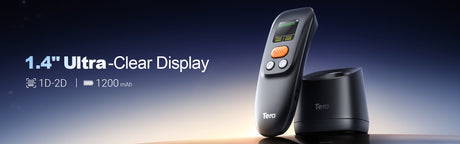
Workers can’t scan what they can’t see. When mobile computer scanners move from indoor lighting to full sun, many “rugged” devices instantly become hard to read, slow to use, and easy to misinterpret. This article focuses on one thing: how to make sure your scanners stay truly sunlight-readable—from display technology and specs to real-world selection and what to do if your current devices are already struggling outdoors.
What Exactly Is a Sunlight Readable Display?
A sunlight readable display is a screen that stays clear and easy to read in bright sunlight, not only indoors.
When you use a normal screen outside, the sun is often stronger than the display. The image looks pale, colors wash out, and you mainly see glare or your own reflection. You might find yourself tilting the device, using your hand as a shade, or simply guessing what is on the screen.
A sunlight readable display is designed to avoid that. From a simple, professional point of view, it is a display system tuned for outdoor use, especially for devices like barcode scanners, mobile computers, rugged tablets and RFID readers.
In technical terms, a sunlight readable display usually does three key things at the same time:
- It reaches higher brightness than a standard office screen.
- It controls reflections on the glass or cover lens.
- It keeps strong contrast so dark areas stay dark and bright areas stay bright, even under strong ambient light.
You will often see terms such as high brightness, optical bonding, and anti-reflective (AR) or anti-glare (AG) coating in the spec sheet. These are common methods engineers use to build a sunlight readable display.
For your team in the field, the result is simple. If the display is sunlight readable, workers can scan, check, and confirm on the spot without fighting the screen.
How Is It Different From a Standard Screen?
A sunlight readable display and a standard screen are built for different environments. One is made to work under the sun. The other is made mainly for rooms and offices.
Here is a short comparison to make the difference clear at a glance.
|
What You Compare |
Sunlight Readable Display |
Standard Screen |
|
Main design goal |
Clear outdoors |
Clear indoors |
|
Typical use case |
Outdoor scanning and field work |
Offices and general indoor use |
|
Brightness level |
High brightness for sunlight |
Lower brightness for room lighting |
|
Reflections |
Reduced glare |
Strong glare outdoors |
|
Contrast in sunlight |
Contrast stays more stable |
Contrast washes out in bright light |
|
Comfort for the user |
Easy to read without extra effort |
Hard to read; user shades or tilts it |
You can explain it to a customer in one short line:
A standard screen is fine if you stay inside. A sunlight readable display is made for when you must keep working outside, even at noon.
But knowing what it is is only part of the story. To see why it matters, we need to look at how a mobile computer scanner is actually used outdoors.
Why Do Mobile Computer Scanners Need Sunlight Readable Screens?
Mobile computer scanners need sunlight-readable screens because standard displays become "washed out" and unreadable when the brightness of the sun overpowers the brightness of the screen.
In industrial and field environments, this isn't just an inconvenience—it is a critical operational failure point that kills productivity and causes errors.

1. Preventing Screen Washout
A typical consumer display outputs around 200–300 nits, while direct sunlight can reach 10,000 nits. When ambient light overwhelms the display, contrast collapses and the screen appears dark or mirrored. Industrial devices solve this with 800–1000+ nit high-brightness panels and transflective layers that use sunlight to enhance visibility instead of competing with it.
2. Ensuring Accurate Scanning and Data Entry
Clear visual feedback is essential for verifying barcodes, confirming IDs, and distinguishing color-coded alerts. When the screen washes out, green and red indicators can look the same—leading to scanning errors, inventory mismatches, and costly workflow interruptions.
3. Maintaining Workflow Speed
Without a sunlight-readable screen, workers slow down because they must:
- Look for shade
- Shield the display with one hand
- Tilt and squint to reduce glare
Across an entire team, these micro-delays add up to major productivity loss.
4. Improving Safety and Reducing Eye Strain
When workers struggle to read a dim screen, they lose situational awareness—dangerous in environments with forklifts, traffic, or heavy machinery. Low contrast also leads to eye fatigue and headaches, reducing efficiency over the course of a shift. It maks more safe.
5. Adapting to Rapidly Changing Light Conditions
Mobile workers move constantly between indoor, shaded, and outdoor environments.
Sunlight-readable displays support this with:
- Wide dynamic brightness ranges (from ~5 nits indoors to 1000+ nits outdoors)
- Automatic brightness adjustments
- Optical bonding to reduce reflections and prevent fogging
So we know why mobile computer scanners need sunlight readable screens. But what kinds of display technologies can really handle outdoor light on these devices?
Which Display Technologies Enable Sunlight Readable Screens in Mobile Computer Scanners?
Mobile scanners rely on different display technologies, and each behaves differently under bright outdoor light. The three most common options—transflective LCD, high-brightness IPS, and standard TFT—provide varying levels of readability depending on how they manage light.

Transflective LCD: Using Sunlight to Improve Visibility
A transflective LCD uses a special layer that both transmits and reflects light. In strong sunlight, this layer reflects ambient light back through the pixels, helping text and icons remain visible even with a low backlight.
Key characteristics:
- Uses sunlight to boost visibility
- Reduces power consumption outdoors
- Softer colors due to reduced backlight intensity
- Ideal for simple data screens and long outdoor operation
This panel type is often found in basic handheld terminals and field instruments where battery efficiency and daylight readability matter more than rich color.
High-Brightness IPS: Strong Color With a Powerful Backlight
High-brightness IPS relies on an IPS panel combined with a strong backlight—often 800 to 1,200 nits or more—to stay readable in sunlight. IPS technology provides stable color and wide viewing angles, while the increased brightness helps overcome glare.
Best for:
- Map-based applications
- Color-coded workflows
- Signature capture and interactive interfaces
Because the bright backlight consumes more energy, devices using this type of display typically include larger batteries or smart brightness controls to manage outdoor power usage.
Standard TFT: Suitable Mainly for Indoor Use
Standard TFT panels usually operate at 200–300 nits, enough for offices or indoor warehouses. Indoors they are clear and easy to read, but in direct sunlight the backlight cannot compete with the ambient brightness, leading to washed-out visuals and poor contrast.
These panels are typically used in scanners meant for indoor environments. For devices requiring long hours of outdoor readability, standard TFT is less common unless paired with additional enhancements.
Optical Bonding: Enhanced Clarity for Any Display Type
Optical bonding is a technique used to improve sunlight readability across all display technologies. By filling the air gap between the cover glass and the LCD with a clear adhesive, internal reflections are reduced, resulting in better contrast and a more readable screen.
Benefits include:
- Less glare and fewer internal reflections
- Improved clarity without increasing backlight power
- Greater durability and reduced fogging in rapid temperature changes
For outdoor-ready mobile scanners, display type and optical bonding are often chosen together to ensure consistent performance in real-world field conditions.
The table below summarizes how these technologies differ in strong light and how they are
|
Technical Aspect |
Transflective LCD |
High-Brightness IPS |
Standard TFT |
|
Sunlight readability mechanism |
Uses reflected sunlight to support visibility |
Uses a strong backlight to maintain visibility |
Uses indoor-level backlight and is less effective outdoors |
|
Ambient light behavior |
Visibility improves as ambient light increases |
Visibility depends on backlight strength |
Visibility decreases as ambient light becomes stronger |
|
Contrast stability |
Holds contrast in direct sunlight |
Maintains contrast with high brightness |
Contrast drops more quickly in bright light |
|
Backlight dependency |
Low in outdoor settings |
High at peak brightness |
Medium for indoor use |
|
Color and viewing characteristics |
Softer colors; narrower angles |
More stable color with wide angles |
Color and angles tuned for indoor viewing |
|
Power use pattern |
Lower power outdoors when backlight is reduced |
Higher power outdoors at full brightness |
Moderate power use in indoor conditions |
|
Typical use case |
Outdoor devices focused on simple data and long runtime |
Rugged devices with richer visual apps and maps |
Mobile computer scanners mainly used indoors |
Knowing the panel types helps, but what really matters are the specs that decide how the screen performs in sunlight.
What Technical Specs Define a Truly Sunlight Readable Display?
A sunlight-readable display is not defined by panel type alone. A few key technical specs determine whether a screen stays usable in real outdoor conditions. Below are the most important ones, explained simply with practical target values.

1. Peak Brightness (Nits)
Peak brightness is the maximum light output of the display, measured in nits. It describes how strongly the screen’s backlight can compete with sunlight.
Best values for sunlight readability
- Minimum for outdoor work: around 600 nits
- Recommended for direct sun: 800–1,200 nits for mobile scanners
- Above 1,200 nits: useful for very harsh sun or large screens, but increases power use
2. Contrast Ratio
Contrast ratio measures the difference between the darkest black and the brightest white the display can show. Higher contrast keeps text and icons readable when glare and reflections are present.
Best values for sunlight readability
- Acceptable baseline: 800:1
- Better for outdoor use: 1,000:1 or higher on IPS / TFT panels
- For transflective displays, effective contrast in sunlight matters more than the lab number, but higher is still better.
3. Surface Reflections (Anti-Reflective / Anti-Glare Treatments)
These are coatings and surface finishes applied to the cover glass to reduce mirror-like reflections and scattered glare from sunlight or strong lamps.
Best values / guidelines
- Look for anti-reflective (AR) coating with low reflectance, typically below 1.5–2%.
- Anti-glare (AG) finishes help diffuse harsh reflections but should not be so aggressive that they blur fine text.
- For product specs, wording like “sunlight readable with AR coating” or “low reflectance cover glass” is a good sign.
4. Optical Bonding
Optical bonding fills the air gap between the LCD and the cover glass with a clear adhesive, eliminating internal reflections and improving contrast.
Best practice for outdoor devices
- For scanners used regularly outdoors, optical bonding is strongly recommended.
- It does not change the nit rating, but in real use it can make a 700–800 nit bonded panel look clearer than a brighter, non-bonded panel.
5. Viewing Angles and Color Stability
Viewing angles describe how well the image holds its color and contrast when the user looks from the side or from above/below. In mobile work, devices are rarely viewed straight-on.
Best values for sunlight readability
- Look for IPS-level viewing angles, typically 160–178° (horizontal and vertical).
- Colors (especially red/green status indicators) should remain distinguishable even when the device is tilted.
6. Automatic Brightness Control
Automatic brightness uses a light sensor to adjust the screen brightness based on the environment—dim indoors, bright outdoors.
Best behavior for field use
- The backlight should ramp up quickly in strong light and drop down in dark environments to avoid glare and save power.
- For outdoor-focused scanners, look for auto-brightness with a max level of at least 800 nits.
Once you know what to look for in the specs, the remaining question is where each device and display setup fits best in real-world workflows.
How Different Industries Should Choose Sunlight-Readable Displays for Mobile Computer Scanners
Different industries require different sunlight-readable display setups because their lighting conditions, workflow patterns, and visibility needs vary widely. The best way to choose the right display for a mobile computer scanner is to match the display type and brightness level to the actual environment in which workers use the device.
Below is how each major industry should make that choice — and the types of sunlight-readable displays that work best in real field conditions.

1. Logistics, Parcel Delivery & Field Mobility
Workers in delivery and field service frequently move between indoor areas, vehicle cabins, and direct sunlight. They rely on clear visuals for maps, signatures, and color-coded task screens.
Recommended display traits
- High-brightness IPS for strong color and clarity
- 800–1,000 nits peak brightness for readability outdoors
- Optical bonding to reduce reflections on bright surfaces
- Wide viewing angles for quick glances in motion
Example Fit: Tera P166 uses a 5.5-inch HD IPS display with durable optical bonding and outdoor-friendly brightness. It’s well-suited for couriers and technicians who need a larger, clearer screen for route guidance or proof-of-delivery workflows.
2. Warehousing, Manufacturing & Indoor-Dominant Environments
Most warehouse work happens under artificial lighting, but workers still face occasional glare near loading docks, skylights, or open bays.
Recommended display traits
- Standard or medium-brightness IPS (400–800 nits)
- Good contrast ratio for barcode confirmation screens
- Anti-glare surface treatments to limit harsh reflections indoors
- Compact screens for scanning-focused tasks
Example Fit: Tera P400 uses a 4-inch IPS display designed for inventory and production-line work. Its daylight-tolerant panel, combined with IP67 rating and a fast HS7 scan engine, makes it reliable for warehouses where lighting conditions vary throughout the day.
3. Utilities, Field Service & Outdoor Technical Work
Technicians may spend long hours outside and often read simple dashboards, asset IDs, or work orders in direct sunlight. Power efficiency also matters due to long shifts.
Recommended display traits
- Transflective or power-efficient IPS for clear outdoor readability at lower backlight levels
- Wide dynamic brightness range for moving between bright and shaded areas
- Strong contrast for reading text outdoors
- Durable glass to handle rough conditions
Example Fit: Tera P172 features a 5.2-inch FHD IPS display with Corning Gorilla Glass, offering excellent clarity and durability for technicians working on utility poles, pipelines, or outdoor equipment—especially when gloves or wet hands are involved.
4. Construction, Mining & Heavy Industrial Sites
Bright sunlight, dust, and vibration demand displays that remain readable and durable under extreme conditions.
Recommended display traits
- High-brightness IPS (1,000+ nits)
- Optical bonding for maximum contrast in sunlight
- Rugged cover glass (e.g., Gorilla Glass)
- Wide viewing angles for safety-critical information
Example Fit: Tera P166 and P172 both offer bonded IPS screens and rugged, drop-resistant construction, making them suitable for on-site inspections, work-ticket updates, or equipment status checks in harsh outdoor environments.
5. Retail, Curbside Pickup & Outdoor Service Points
These environments mix indoor POS operations with outdoor handoffs, requiring displays that handle shifting light conditions and maintain brand-consistent visuals.
Recommended display traits
- Bright IPS panel (600–800 nits)
- Good color accuracy for UI consistency
- Automatic brightness adjustment
Example Fit: Tera P166—with its bright, color-accurate IPS display—is ideal for tasks such as curbside order pickup, outdoor POS verification, or customer-assisted barcode scanning.
Different industries face different lighting challenges. Selecting the right sunlight-readable display is not only about brightness—it’s about contrast, coatings, bonding, durability, and how often workers move between lighting environments.
By aligning display characteristics with actual workflow conditions, organizations can ensure their mobile computer scanners remain readable, reliable, and safe to use across all environments.
How to Read Sunlight-Readability Specs Without Falling for Marketing Hype
Step 1 — Check the actual brightness value.
Ignore vague claims like “outdoor readable.” Real transparency requires a nit number. For mobile computer scanners, around 600 nits is the entry point for outdoor work, while 800–1,200 nits is generally needed for direct sunlight.
Step 2 — Look at contrast, not just brightness.
Brightness alone doesn’t guarantee readability. A display with weak contrast will still look washed out in sunlight. As a practical reference, a contrast ratio of 800:1 or higher is recommended for outdoor visibility.
Step 3 — See if the device addresses reflections.
Sunlight reflection is one of the biggest reasons screens look faded. Displays that mention anti-reflective or anti-glare treatments typically perform better outdoors, even when the brightness rating isn’t the highest.
Step 4 — Verify whether the screen is optically bonded.
Optical bonding removes the internal air gap and improves clarity under strong light. In real-world conditions, a bonded 800-nit screen can outperform a non-bonded 1,000-nit one.
Step 5 — Be cautious with marketing language.
Terms like “sunlight optimized,” “enhanced visibility,” or “high brightness” don’t mean much without supporting numbers. Always default back to measurable specs: brightness, contrast, reflectance control, and bonding.
So what if the devices you already have still fail outdoors? Let’s look at your options.
What to Do If Your Current Devices Aren’t Sunlight-Readable
Even with the right workflows and training, productivity will drop sharply if workers can’t see their screens outdoors. If your existing mobile computer scanners struggle in bright sunlight, there are several practical steps you can take—ranging from quick fixes to long-term improvements.

1. Try Immediate Visibility Improvements
Before replacing any hardware, there are a few adjustments that often help right away:
Increase brightness manually. Auto-brightness or power-saving modes may cap the backlight too low for outdoor use.
Clean the display surface. Fingerprints and smudges increase glare and scatter sunlight, reducing contrast.
Switch to a high-contrast interface. Light text on dark backgrounds (or vice versa) improves readability when ambient light is strong.
Disable overly aggressive battery-saving features. Some devices dim the screen automatically to extend battery life, even when users need maximum visibility.
These changes won’t make a low-brightness screen “sunlight readable,” but they can make marginal displays more usable.
2. Use Low-Cost Add-Ons to Reduce Glare
If brightness is acceptable but reflections are the core issue, inexpensive accessories can help:
Anti-glare or anti-reflective screen protectors reduce mirror-like reflections. Snap-on sunshades can help in fixed or semi-fixed workflows (e.g., forklifts, check-in stations). Protective cases with deeper bezels can slightly shield the screen from direct angles of sunlight.
These solutions improve readability without requiring a new device.
3. Adjust Software for Better Outdoor Visibility
In many cases, UI design has as much impact as the display hardware:
Increase font size and boldness for critical text. Use color palettes that stay distinct in sunlight, avoiding subtle pastels. Enable “outdoor mode” if the device provides it (some OEMs include this feature). Simplify layouts so workers aren’t trying to read dense screens in harsh lighting.
Small software changes can create surprisingly large improvements for field workers.
4. Know When It’s Time to Upgrade the Device
Some screens simply cannot perform outdoors, no matter how much you tweak them. Upgrading becomes necessary when:
- The display’s brightness is below 400–500 nits
- The screen is not optically bonded, causing strong internal reflections
- Outdoor work represents a significant share of daily tasks
- Workers frequently seek shade or misread prompts
- Safety or accuracy is affected by poor visibility
If multiple symptoms apply, continuing with the same hardware often costs more in productivity than upgrading.
5. What to Look for in Your Next Mobile Computer Scanner
When replacement becomes the most efficient option, use this simple checklist:
- Brightness: 800–1,200 nits for reliable sunlight readability
- Contrast: 800:1 or higher
- Optical bonding: eliminates internal reflections
- Surface treatments: anti-reflective or low-glare glass
- Panel type: IPS for rich UI; transflective for long outdoor shifts
- Viewing angles: wide angles for quick glances while moving
- Ruggedness: appropriate IP and drop ratings for the work environment
These specs matter more than any marketing slogan.
Real-World Examples of Sunlight-Capable Devices
Modern mobile computer scanners address sunlight readability through a combination of bright IPS displays, strong contrast, and optical bonding.
- Tera P166: A 5.5-inch HD IPS display with durable optical bonding makes it suitable for logistics, delivery, and outdoor service tasks where workers frequently move between indoor and outdoor lighting.
- Tera P400: Its compact 4-inch IPS screen performs well in warehouses and industrial environments where lighting conditions vary but direct sunlight exposure is limited.
- Tera P172: A 5.2-inch FHD IPS display protected by Corning Gorilla Glass offers clarity and durability for technicians and inspectors who spend most of their day outdoors.
These examples illustrate how device selection can align with actual lighting conditions and workflow requirements.

Conclusion: Sunlight Readability Is Not Optional—It’s Operational
Sunlight readability isn’t just a display specification—it’s a core requirement for mobile computer scanners used in real field conditions. By understanding the right technologies and knowing how to evaluate the specs, teams can choose devices that stay visible, accurate, and dependable outdoors.
Now is the time to review your current equipment and ensure your scanners are truly fit for the environments where your work happens. Clear screens lead to clear decisions—and better results.
Sunlight readability directly affects accuracy and efficiency. Use these guidelines to evaluate your current devices and upgrade where needed—your team’s productivity depends on it.