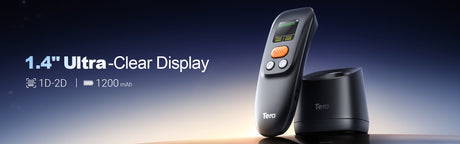
In a world where checkout lines move faster than decisions, barcode scanners have become silent engines of global trade. Yet behind every quick scan lies a slower problem—rising costs, scattered technology, and pressure to keep up with automation.
Recent studies show the barcode scanner market will surpass $12 billion by 2030, driven by AI imaging, Android integration, and connected logistics. This article breaks down what’s really shaping the market: growth trends, regional shifts, pricing changes, and future-ready innovations.
By the end, you’ll know how brands like Tera turn these forces into scanning systems built for accuracy, speed, and the decade ahead.
What Is the Barcode Scanner Market and Why Does It Matter?
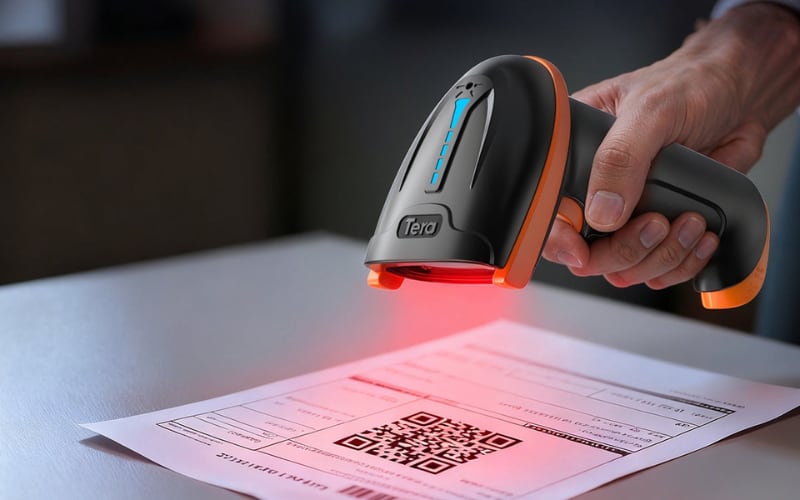
The barcode scanner market includes the companies that design, sell, and use devices to read barcodes. These tools turn simple lines or squares into digital data that computers can understand. Every time a product is scanned at a checkout or a box is logged in a warehouse, that action belongs to this market.
The barcode scanning industry combines three parts:
- Hardware — handheld, fixed, and wearable scanners used across industries.
- Software — decoding tools that connect scanned data to wider systems.
- Services — setup, training, and maintenance that keep operations running.
Together, they make work faster, reduce errors, and bring real visibility to every step of the supply chain.
In the United States, barcode scanners represent about one-third of the global market value—one of the highest adoption rates worldwide. Demand comes from retail, logistics, and healthcare, where speed and accuracy are critical to service quality. U.S. businesses rely on barcode systems to track goods, ensure compliance, and meet the growing pace of online orders.
Simply put, the barcode scanner market keeps modern trade moving. Without it, deliveries would slow, shelves would empty, and customers would wait longer at checkout. Understanding how this market works helps businesses make smarter technology decisions for the future.
The market is central to global trade. But how fast is it growing—and what forces are driving that growth?
How Fast Is the Global Barcode Scanner Market Growing Through 2030?
The global barcode scanner market keeps growing year by year—and will continue to rise through 2030. Growth is steady rather than explosive, driven by regular hardware upgrades and the global shift from manual to digital workflows. You can think of it as a market that climbs one solid step at a time.
Several forces drive this rise.
- E-commerce and smart warehousing increase the need for fast, error-free data capture.
- Android barcode scanners and mobile computers make deployment faster and easier by integrating directly with retail and warehouse systems.
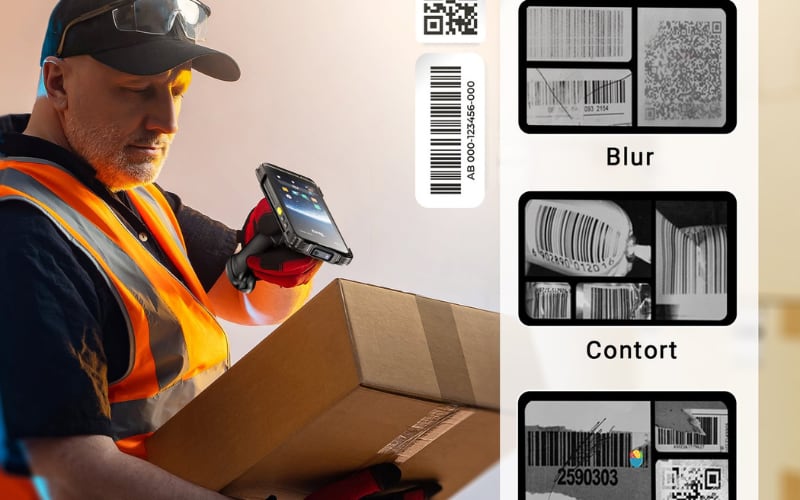
- Direct Part Marking (DPM) technology fuels new demand for imagers that read tiny, worn, or curved barcodes in manufacturing.
Growth is not equal everywhere. Some regions upgrade faster than others, while companies with tighter budgets run mixed fleets—older laser models beside new imaging devices—until full integration is complete.
Still, most enterprises now plan phased refresh cycles through 2030, upgrading their busiest sites first and expanding as results prove value.
Real-world projects confirm the trend. Tera’s field data shows that one U.S. retail partner achieved 20% faster checkout speeds after adopting modern scanners—proof that precision hardware and smart workflows multiply each other’s benefits.
New use cases keep adding momentum. Healthcare tracking, curbside pickup, and line-side scanning in factories all push adoption forward, ensuring steady, long-term growth for the global barcode scanning industry.
So where does this steady climb lead next—toward new regions or new product types?

Which Regions Lead the Barcode Scanner Market Today?
North America remains the largest and most mature barcode scanner market. The United States drives most of the demand thanks to strong retail and logistics networks. Businesses replace scanners regularly to match e-commerce speed and accuracy goals.
Government and healthcare programs also require strict tracking, creating a constant base of demand. Tera, a Switzerland-born brand now based in California under ADM Tech LLC, supports this market with reliable hardware used by governments, factories, and hospitals across the country.
Europe follows with stable, replacement-driven growth. Buyers focus on scanners that meet data protection and compliance standards, while prioritizing reliability over rapid upgrades. Growth is steady but slower, as many companies already operate modern digital systems.
Asia-Pacific is the fastest-growing region in the global barcode scanning market. Its manufacturing strength, expanding retail sector, and widespread Android adoption fuel rapid adoption. China, Japan, and Southeast Asia are now key battlegrounds for both global and local brands. Lower device prices and faster manufacturing cycles make the region a hub for innovation and volume shipments.
Emerging markets are catching up. Latin America, the Middle East, and parts of Africa are investing heavily in logistics, e-commerce, and public service systems that all depend on better data capture. Infrastructure gaps remain, but falling device costs and growing connectivity are closing the divide each year.
In short, North America leads in value, Europe in reliability, and Asia-Pacific in growth momentum. Together, these regions shape the global barcode scanning landscape for the decade ahead.
How Is the Market Segmented by Product Type?
In the global barcode scanner market, products are mainly segmented by type into three groups: handheld, fixed-mount, and wearable scanners. Handheld models still take the largest share because they are simple to use, affordable, and easy to move between workstations. They remain the go-to choice in stores, offices, and logistics hubs where mobility matters most.
Each product type fits a different need:
- Handheld scanners manage quick, flexible jobs like checkout or shelf scanning. They still account for the biggest part of total sales.
- Fixed-mount scanners stay in one position, often built into conveyor lines or kiosks, to keep items moving smoothly with no hands-on work.
- Wearable scanners, such as ring or glove models, free both hands. This lets warehouse teams move faster and stay less tired during long shifts.
Industry adoption follows clear patterns: handheld scanners dominate retail and logistics; fixed-mount units lead automated production; wearable devices rise fastest in e-commerce fulfillment centers. In addition, new hardware upgrades—like vibration feedback, DPM (Direct Part Marking) reading, and 3-in-1 connectivity—keep shifting market balance. Tera, for instance, refines its handheld line with these features, widening their use from retail counters to factory floors.
As working environments grow tougher, performance needs change too. Scanners built for factories and production lines now play a special role. So what makes industrial barcode scanners stand out in this mix?
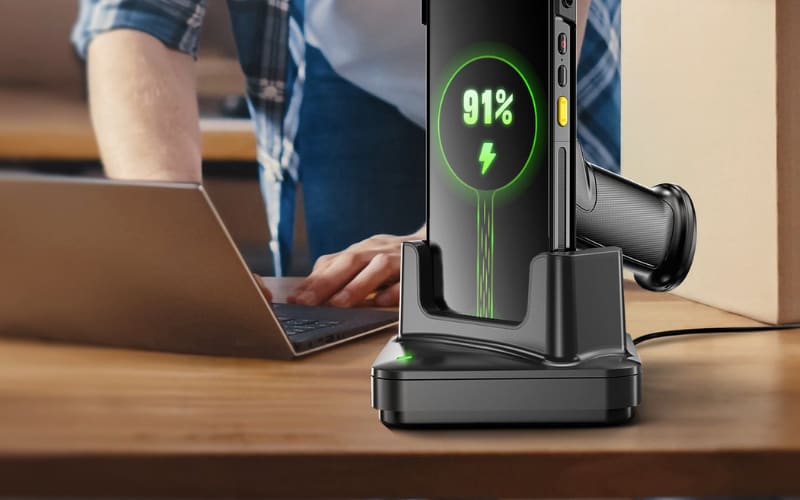
Industrial vs. Handheld Scanners: Where Each Fits Best in the Market
The global barcode scanner market is shaped by two core product categories—industrial and handheld scanners. Together, they define how demand splits between high-precision manufacturing and everyday commercial use. Handheld scanners hold the largest market share today, while industrial models are growing faster as factories digitize production lines.
Industrial scanners represent the performance-driven side of the market. They are built for tough environments such as automotive, aerospace, and medical manufacturing, where traceability and uptime are critical. Most support Direct Part Marking (DPM) and meet IP65 or IP67 durability standards.
These features make them essential for smart factories and Industry 4.0 projects, which are expected to drive double-digit growth in the industrial barcode scanner segment through 2030. Tera’s 8100DPM Pro illustrates this trend with megapixel imaging, 9.8-foot drop resistance, and vibration feedback—features aligned with high-end industrial demand.
Handheld scanners remain the backbone of the barcode scanning market. They dominate retail, logistics, and healthcare applications thanks to their speed, portability, and affordability. Modern handheld models now use AI decoding and Android systems to connect directly with POS, ERP, and warehouse software.
This flexibility keeps the handheld scanner market stable, with consistent replacement cycles and broad global adoption across small and medium enterprises. Tera’s handheld line reflects this balance, combining triple connectivity and ergonomic design for both retail counters and warehouse operations.
In short, handheld scanners sustain the market’s foundation, while industrial scanners drive its next wave of growth. Their complementary roles mirror the industry’s evolution—from basic data capture to intelligent, connected scanning solutions that fuel global automation.
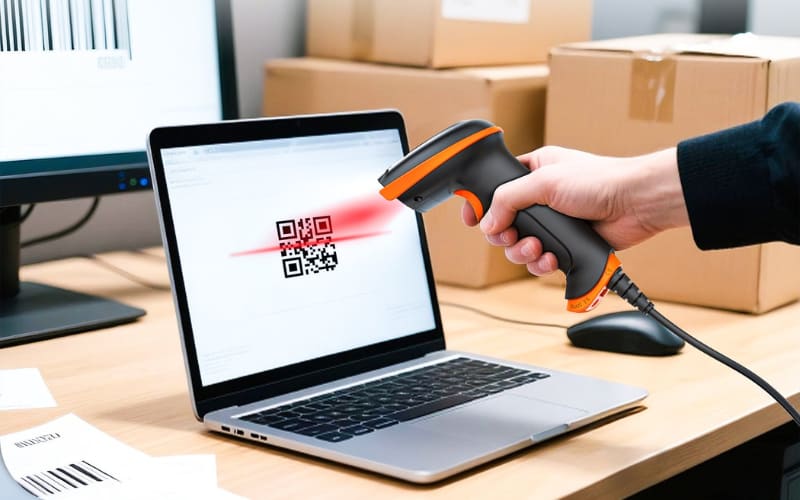
Laser or Imaging: Which Technology Leads the Market Now?
Imaging technology now dominates the global barcode scanner market, replacing laser systems as the new industry standard.
Laser scanners once led for their speed and simplicity in reading 1D barcodes, but the shift toward 2D and QR codes has changed the landscape.
Today, imaging scanners capture full barcode images through sensors and software, offering higher precision, faster processing, and broader compatibility across materials and surfaces.
Laser vs. Imaging — Key Differences
- Technology: Lasers measure bar width with light beams; imaging uses camera sensors for full-pattern capture.
- Code Support: Lasers read only 1D codes, while imaging handles both 1D and 2D (QR, Data Matrix, PDF417).
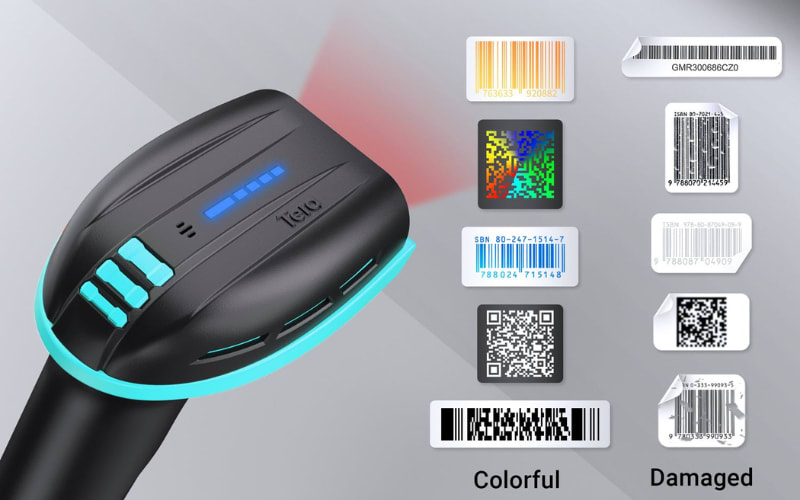
- Accuracy: Imaging performs better on small, damaged, or reflective codes.
- Adaptability: Imaging works across varied lighting, surfaces, and device angles.
- Market Trend: Imaging scanners now account for most new shipments since 2022, while laser demand is declining in retail and office settings.
AI-based imaging is taking this trend further. Modern scanners powered by AI can decode poor-quality or curved codes with near-perfect accuracy, even in motion. Tera integrates these capabilities in its 8100DPM Pro and Android PDA series, combining megapixel imaging with intelligent recognition. Laser scanners will remain in low-cost, single-line applications—but imaging defines the future of the barcode scanning industry, driving both innovation and market growth.
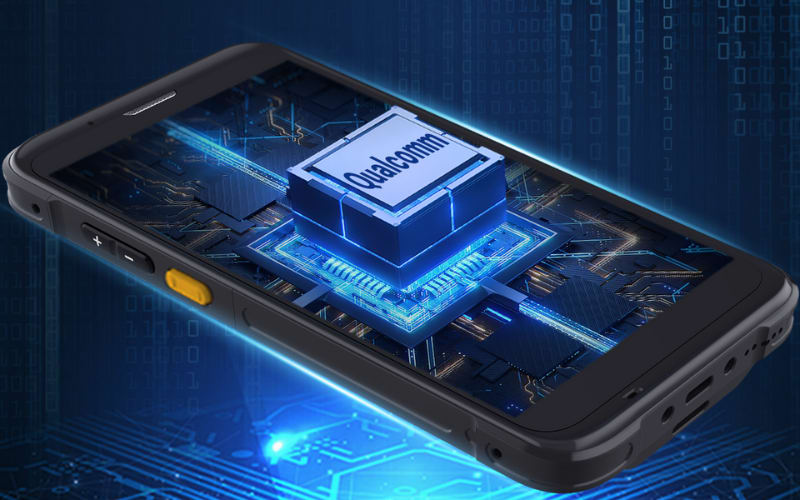
How Is the Android Barcode Scanner Market Changing Competition?
Android has transformed the barcode scanner market from closed systems into open, connected ecosystems. Most new enterprise scanners now run on Android, replacing older proprietary platforms that limited software flexibility. This shift reshapes competition—moving the focus from hardware speed to integration, usability, and long-term manageability.
Why Android Changed the Game
- Compatibility: Android scanners connect easily with POS, WMS, and ERP systems, enabling real-time data sharing.
- Ease of Use: Workers familiar with smartphones can operate Android devices instantly, reducing training time.
- Software Agility: Brands can roll out updates and security patches over the air (OTA), avoiding downtime.
- Cost Efficiency: Open platforms lower IT costs and simplify device management at scale.
Competition now centers on ecosystems, not equipment. Manufacturers compete on how seamlessly their Android scanners fit into enterprise workflows, how securely they handle data, and how easily they integrate with existing systems. Success depends on combining robust hardware with flexible software—turning scanners into smart terminals that can evolve with business needs.
Tera embodies this shift with its P166GC, powered by Android 13, Wi-Fi 6, and Qualcomm 8-core processors. They deliver industrial-grade durability with smartphone-level usability, bridging the gap between rugged performance and intuitive design.
Android has become the foundation of modern barcode scanning. It sets the stage for AI-enabled recognition, faster workflows, and simpler device control—marking a new era of competition where software defines success.

Which Industries Drive Most Barcode Scanner Demand?
Retail and logistics lead the global barcode scanner market. Together, they account for more than half of global demand. These industries rely on fast, accurate scanning for every order, return, or checkout—making reliability and speed their top priorities.
Industry Overview
Industry |
Core Use Case |
Key Needs |
Retail & E-commerce |
POS checkout, shelf audits, return processing |
Speed, ergonomic design, long battery life |
Logistics & Warehousing |
Picking, sorting, and delivery tracking |
Long-range reading, durability, wireless stability |
Manufacturing |
Part identification and quality control |
DPM compatibility, precision, resistance to dust |
Healthcare |
Patient ID, medication tracking, sample labeling |
Hygiene safety, accuracy, quiet operation |
Retail and logistics remain the largest buyers. They need scanners that run all day and handle thousands of items without downtime. Fast connection with ERP or POS systems is key to efficiency.
Manufacturing and healthcare are fast-growing segments. Factories demand rugged, industrial-grade scanners for traceability, while hospitals focus on hygiene and silent feedback to avoid disruption in patient care.
Tera serves across these sectors. Its wireless handhelds and Android PDAs support both retail counters and factory floors—combining speed, precision, and durability in one system.
Each industry pushes scanner design in a different direction—from lightweight retail tools to heavy-duty factory devices. So what forces truly drive or limit this market’s growth?
What Drives and Limits Barcode Scanner Market Growth
The barcode scanner market continues to expand, but not without challenges. Automation, e-commerce, and digital compliance fuel adoption, while costs and system integration barriers hold back some regions.
Main Growth Drivers
- Automation and Smart Warehousing: Businesses rely on scanners to connect goods, data, and workers in real time.
- AI and Advanced Recognition: Imaging and deep learning improve accuracy in poor conditions.
- IoT and Cloud Integration: Devices now link to enterprise platforms for live visibility.
- Regulatory Compliance: Governments require barcode traceability in healthcare, food, and logistics.
Key Limitations
- High Upfront Cost: Upgrading to advanced Android or industrial systems requires investment.
- Training and Compatibility: Teams need time to adjust and integrate older POS or ERP systems.
- Maintenance and Lifecycle: Frequent use shortens device life in tough environments.
- Data Protection: Privacy and security laws increase system complexity.
These dynamics define the market’s current balance between opportunity and constraint. How these same forces evolve will determine the different growth paths we might see by 2030.

Pricing, Channels, and Key Players in the Barcode Scanner Market
The barcode scanner market is entering a mature but competitive phase. Prices are stabilizing, sales channels are diversifying, and both global and regional brands are competing for share through smarter distribution and ecosystem integration.
Pricing Trends: Stable at the Top, Cheaper at the Base: Average Selling Prices (ASP) are diverging. Entry-level handheld scanners continue to fall in price, driven by mass production and component cost reductions.
Meanwhile, industrial and Android-based models hold steady—or even rise slightly—thanks to longer lifecycles, better durability, and enterprise software compatibility. This split shows how the market is expanding in both directions: affordability for small retailers, and high-value systems for industrial automation.
Channel Shifts: From Distributors to Digital Direct: Traditional distributors and dealers still handle bulk orders, but digital sales now dominate growth. E-commerce platforms have made B2B purchases faster and more transparent, while direct brand channels let manufacturers manage pricing and customer relationships more closely.
OEM partnerships are also growing, especially in sectors like healthcare and manufacturing, where brands customize scanners for system integrators or logistics solutions providers. This hybrid structure—mixing wholesale networks and direct e-commerce—defines the modern barcode scanner sales ecosystem.
Key Players and Market Competition
Brand |
Core Strength |
Focus Area |
Zebra Technologies (US) |
Advanced imaging, AI analytics, enterprise software integration |
Industrial and logistics automation |
Honeywell (US) |
Rugged handhelds, long-range scanning |
Warehousing and workflow systems |
Datalogic (EU) |
Compact design, optical precision |
Retail and manufacturing |
Tera (US/EU) |
Android compatibility, cost efficiency, modular design |
Retail, logistics, and SME sectors |
Newland (Asia) |
Affordable Android scanners, OEM flexibility |
Emerging markets |
Global leaders like Zebra, Honeywell, and Datalogic dominate enterprise contracts through full ecosystems of hardware and software. However, emerging brands such as Tera and Newland are winning share by offering flexible Android integration and faster innovation cycles. Competition now balances scale versus agility, with pricing, distribution, and software support shaping market leadership.
In short, pricing pressure, channel diversification, and ecosystem innovation now define the competitive core of the barcode scanner market. The brands that align all three—value, access, and integration—will lead the next wave of global growth.
Barcode Scanner Market 2030: Key Trends and Growth Outlook
The barcode scanner market is moving toward a smarter, more connected, and sustainable decade.
By 2030, technology and economics will shape its future in equal measure—where AI, Android, and automation define innovation, and cost control and sustainability determine adoption speed.
Key Trends Shaping the Market
- AI Decoding and Smart Vision – Imaging scanners powered by AI can now read damaged, curved, or low-contrast barcodes, improving speed and reducing error rates across logistics and manufacturing.
- IoT and Cloud Device Management – Scanners are evolving into networked data endpoints, enabling real-time tracking, fleet monitoring, and predictive maintenance through connected systems.
- Sustainable Design and Energy Efficiency – Manufacturers focus on recyclable materials, low-energy components, and longer lifecycles as customers demand lower carbon footprints.
- Lightweight and Mobile-First Devices – Android-based handhelds and PDAs dominate new releases, reflecting user demand for ergonomic, connected, and easily managed devices.
Market Outlook Scenarios to 2030
Scenario |
Description |
Growth Outlook |
Baseline |
Gradual adoption of AI and Android systems; moderate automation investment |
5–7% CAGR globally |
Optimistic |
Rapid digitalization, strong e-commerce, and logistics innovation |
Double-digit growth, led by the U.S. and Asia-Pacific |
Conservative |
Slower IT upgrades, high costs, or economic headwinds |
Flat or mild growth, driven by replacements only |
Regional dynamics remain distinct. North America will continue to lead high-value enterprise adoption, driven by automation and labor cost pressures. Asia-Pacific will grow fastest in shipment volume, supported by local manufacturing and lower hardware costs. Europe will prioritize sustainable, regulation-compliant devices over aggressive expansion.
By 2030, the barcode scanner industry will no longer be defined by hardware alone. It will blend intelligence, connectivity, and responsibility—where competitive advantage comes from building faster, greener, and more adaptive ecosystems. The winners will be the brands that align innovation with affordability, turning every scan into a smarter business decision.

How Should Readers Interpret Barcode Scanner Market Research Data?
Market research numbers look exact, but they are guides—not guarantees. Understanding how to read data correctly helps you spot direction, not prediction, and plan smarter business moves.
Key Metrics to Know
- CAGR (Compound Annual Growth Rate): Shows the average growth over several years, not what happens every year.
- Market Share: Tells how sales are divided among brands, but shifts quickly when new products or players appear.
- Segmentation: Breaks results by product, region, or industry—yet definitions vary across reports, so compare carefully.
- Forecast Range: A wide range means higher uncertainty; treat it as a signal, not a promise.
Smart Ways to Read Market Data
- Compare multiple sources before acting on one report.
- Focus on trends, not single numbers—growth patterns matter more than exact values.
- Match insights to your segment and region; global averages can hide local realities.
- Use data as a guide, not as a rulebook—combine reports with your business context.
- Stay updated; even the best forecasts change as markets shift.
Common Misunderstandings to Avoid
- Thinking CAGR means yearly growth—it’s an average rate.
- Ignoring the assumptions or time frames behind a report.
- Mixing datasets that use different currencies or base years.
Final Insight
Good market data doesn’t give answers—it gives perspective. The real value lies in understanding why the numbers move, not just what they say. By reading research critically, businesses can turn raw data into clearer strategies and better decisions.
From Market Trends to Real Solutions with Tera
The barcode scanner market is evolving fast. To stay ahead, businesses need tools that match new demands in speed, accuracy, and flexibility.
Tera delivers scanning solutions built for this future—combining precision, durability, and Android-ready connectivity to keep your operations moving.