Have you ever had a barcode that wouldn’t scan — right when your line needed to move fastest?
In factories and warehouses, a small delay like that can stop production, cause shipping errors, or cost thousands of dollars. Studies show that over 60% of warehouse slowdowns come from scanning or labeling issues. Industrial barcode scanners solve this by turning even damaged or dusty codes into clean, reliable data.
In this guide, you’ll learn what industrial barcode scanners are, how they work, which types fit your workflow, and how to choose the best one for your business — whether you’re upgrading hardware or planning a smart factory system.
What Is an Industrial Barcode Scanner and How Does It Work?
An industrial barcode scanner is a device built to read and decode barcodes in tough working environments like factories, warehouses, and production lines. It captures the black-and-white lines or patterns on labels and turns them into digital data that your system can understand.
It works through a light sensor and a decoding engine. When the scanner’s light beam hits a barcode, the reflected light pattern is converted into electrical signals. These signals are then decoded by software inside the scanner to identify a product, part, or shipment. In simple terms, it translates printed codes into readable business data.
Industrial models are different from office or retail scanners. They are designed to handle dust, vibration, heat, and constant use without losing accuracy. That’s why factories rely on them to keep materials and products moving smoothly every hour of the day.
Knowing how a barcode scanner works is just the start. But what makes it strong enough for the noise, dust, and pressure of an industrial floor? Let’s take a closer look at what truly defines an industrial-grade scanner.
What Makes a Barcode Scanner Truly Industrial-Grade?
A barcode scanner is considered industrial-grade when it can keep working under dust, heat, vibration, and long hours without breaking down. In short, it’s built to survive conditions that would stop a regular scanner in minutes.
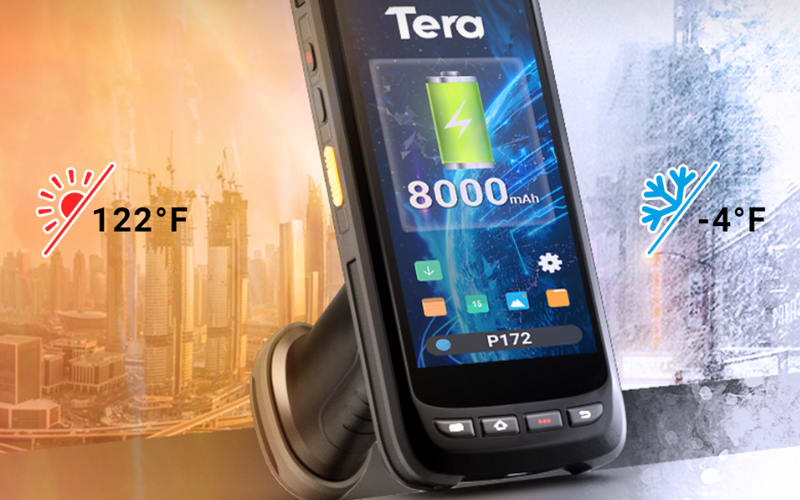
To achieve that, industrial scanners are sealed with IP-rated protection that blocks water and fine dust from reaching the sensor. They are drop-tested, often from about 1.8 meters, to prove the frame and lens can survive real factory accidents. Inside, heat control systems help the device stay cool and accurate during continuous shifts.
If you’ve ever seen a retail scanner used on a factory floor, you know the difference right away. Dust clogs its lens, heat slows it down, and vibration shakes it apart. Industrial scanners handle all that without pause, keeping your work on schedule day after day.
That’s what truly makes them “industrial”—strength, protection, and nonstop performance in the toughest places.
You now know what makes a barcode scanner truly industrial — strong, sealed, and ready for nonstop work. But not every model looks or works the same. Some are fixed in place, some move with you, and each fits a different kind of job. Let’s look at the main types and what each one does best.
What Are the Main Types of Industrial Barcode Scanners?
Industrial barcode scanners come in five main types—laser, CCD, imager, fixed-mount or handheld, and wireless. Each type works differently to solve problems like glare, dust, distance, or high-speed movement that are common in factories and warehouses.
Laser scanners use a focused light beam to read 1D barcodes quickly and from long distances. They are great for fast conveyor lines or high shelves, where items move quickly or sit far away.
CCD scanners rely on an array of tiny light sensors instead of a moving laser. They capture reflected light evenly, which makes them more stable and better at handling shiny or dirty surfaces. They work best at short to midrange distances.
Imager (2D camera-based) scanners take a picture of the barcode and decode it with software. They can read torn, faded, or smudged labels, and handle both 1D and 2D codes, making them popular for tracking parts and inventory.
Fixed-mount scanners stay in one spot, reading items as they pass by on a line. Handheld scanners, on the other hand, move with the worker, perfect for picking, packing, or inspection tasks that need flexibility.
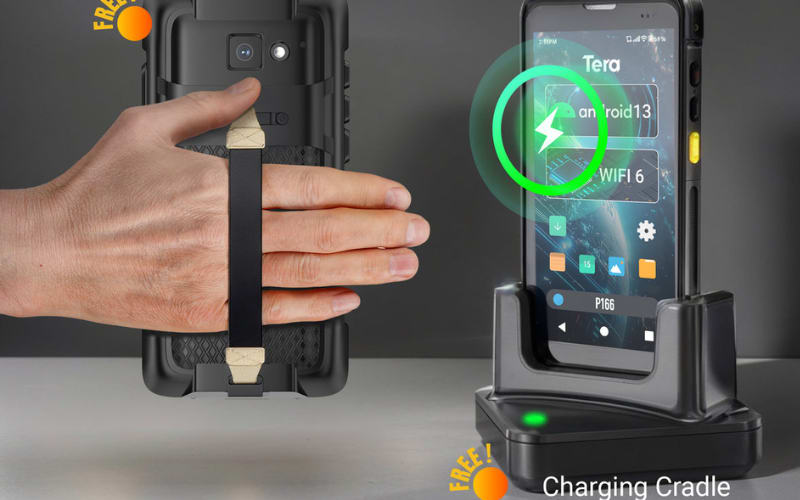
Wireless models connect through Bluetooth or Wi-Fi, giving workers freedom to move without tangled cables. They reduce downtime in wide work areas, though signal strength and battery life can limit long shifts.
Each type fits a different job on the factory floor. Next, let’s see how laser and image scanners compare—and which one suits your operation best.
Which Is Better for Factories: Laser or Image Barcode Scanners?
Neither laser nor image barcode scanners are better in every way. Each fits different factory needs depending on speed, label condition, and working distance.
Here’s a quick comparison to help you see the difference:
Feature |
Laser Barcode Scanner |
Image (Camera-Based) Scanner |
Reading Method |
Uses a laser beam to scan 1D barcodes line by line |
Captures an image and decodes it with software |
Best For |
Clean, printed barcodes moving quickly on conveyors |
Dirty, torn, or 2D barcodes on mixed packaging |
Reading Distance |
Long range — ideal for high shelves or fast lines |
Short to midrange — better for close inspection |
Speed |
Very fast |
Moderate |
Accuracy |
Lower with damaged or shiny labels |
High, even with poor lighting or reflections |
Flexibility |
1D only |
1D and 2D codes |
Maintenance Need |
Low, simple optics |
Slightly higher — software updates may be needed |
Laser scanners win when your goal is speed and distance — perfect for high-throughput warehouses or automated lines. Image scanners lead in accuracy and flexibility, ideal for quality checks and complex parts tracking.
The best choice depends on what your factory values most: speed or precision. Next, we’ll look at how fixed-mount and handheld scanners perform in different work setups.
How Do Fixed-Mount and Handheld Industrial Scanners Compare?
Fixed-mount and handheld industrial barcode scanners do the same job — reading barcodes — but they fit very different factory setups. Fixed-mount scanners stay in one place and read items that move past them. Handheld scanners move with the operator, giving more freedom but less automation.
Fixed-mount scanners are built for automated production lines. They are installed on machines or conveyors and scan every item that passes by. Their big advantage is speed and consistency—they never get tired and can work 24/7. Because they stay still, they are also more stable and precise when aligned correctly. However, they require installation space and setup, which means they cost more to deploy.
Handheld scanners, by contrast, are portable and flexible. Workers can walk around, reach high shelves, or scan parts that can’t move. They are ideal for warehouses, maintenance checks, or small-batch production where mobility matters. The tradeoff is that they rely on human operation, so speed and accuracy depend on the user. Over long shifts, fatigue can also reduce performance.
Here’s a quick side-by-side view:
Feature |
Fixed-Mount Scanner |
Handheld Scanner |
Position |
Installed in one place |
Moved by operator |
Best For |
Automation and high-speed lines |
Manual or flexible work |
Speed |
Continuous, very fast |
Depends on worker |
Ease of Use |
Setup needed |
Plug and use |
Maintenance |
Low |
Medium |
Flexibility |
Low |
High |
In short, fixed-mount scanners shine in automation, while handheld models win in flexibility.
Next, let’s explore how wireless scanners make handheld scanning even smoother on the factory floor.
Are Wireless Industrial Barcode Scanners Reliable in Harsh Environments?
Yes, wireless industrial barcode scanners can be very reliable in harsh environments — if they’re built for heavy-duty use. The key lies in how they handle dust, heat, vibration, and weak signals that often challenge factory floors.
Factories are tough places for any wireless device. Dust and oil can block sensors, heat can drain batteries, and metal walls can cause signal drops. That’s why normal retail scanners often fail after a few weeks of use. Industrial wireless scanners, however, are designed differently to stay stable and connected.
Modern models use strong sealing (IP65 or higher) to keep out dust and moisture. They also include shock-resistant housing and multi-antenna systems that keep Bluetooth or Wi-Fi connections steady even with metal interference. If a signal drops, smart firmware reconnects automatically, reducing downtime. Long-lasting batteries and hot-swap options help scanners run through entire shifts without stopping.
To get the best results, choose models rated for your environment and keep their firmware updated. Test Wi-Fi range in your workspace and avoid consumer-grade devices that can’t handle long hours or temperature swings.
So yes — wireless scanners are reliable, but only when they’re engineered for rough conditions and maintained properly. Next, let’s explore which brands and systems deliver the most reliable industrial performance.

Which Industrial Barcode Scanner Brands Offer the Best Reliability and Integration?
Several industrial barcode scanner brands stand out for their reliability and system integration. The three most notable are Honeywell, Zebra, and Tera — each with unique strengths for different industrial needs.
Honeywell — Known for ultra-rugged hardware (IP65–IP67) and drop resistance up to 1.8 meters. These scanners thrive in harsh, dusty environments such as heavy manufacturing or logistics hubs. Honeywell focuses on hardware reliability and long lifecycle support, ideal for companies prioritizing toughness over flexibility.
Zebra — Recognized as the leader in Android integration, Zebra scanners combine powerful enterprise SDKs, device management tools, and seamless connectivity with Android handheld computers. Their products support real-time data sync, workflow automation, and enterprise security, making them a top choice for smart factories and warehouses.
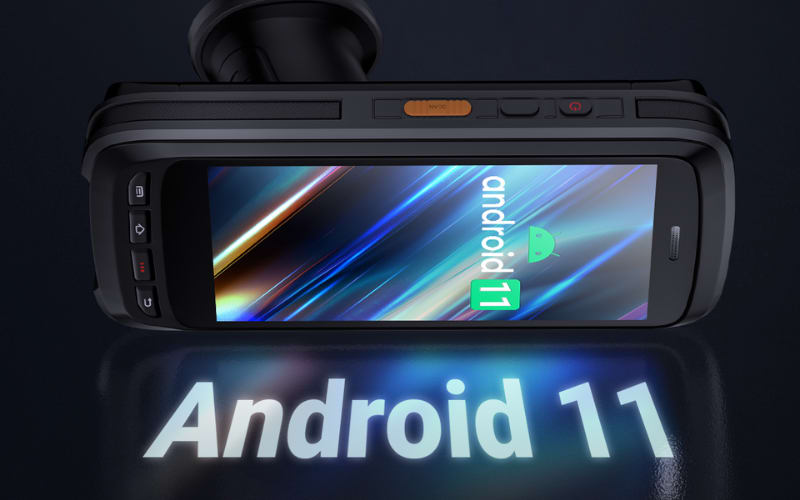
Tera — As a newer yet fast-growing brand, Tera delivers Android-based barcode scanners (Android 11 / 13) with Zebra SE4710 and SE4750 engines, ensuring world-class decoding accuracy. They feature Wi-Fi 6 connectivity, large 8000mAh batteries, and open SDKs for easy integration with WMS or ERP systems. Designed for reliability, Tera balances performance, openness, and value, making it an excellent fit for teams that need industrial strength without enterprise-level cost.
Brand Comparison at a Glance
Brand |
Core Strength |
Durability / IP Rating |
Integration & SDK Support |
Battery & OS |
Price Level |
Honeywell |
Hardware toughness |
IP65–IP67 |
Closed enterprise platform |
Proprietary OS |
$$$ |
Zebra |
Android ecosystem & SDKs |
IP65 |
Deep Android integration |
Android / Enterprise Mobility |
$$$ |
Tera |
Open Android + cost-effective |
IP65–IP67 |
Open SDK & Wi-Fi 6 ready |
Android 11 / 13 |
$$ |
Each brand meets industrial needs differently: Honeywell leads in rugged durability, Zebra in enterprise integration, and Tera in balanced Android performance and flexibility. If your business needs strong reliability, easy integration, and scalable value, Tera stands out as a smart, modern choice.
Next, let’s see how to choose the right industrial barcode scanner for your business — based on connectivity, environment, and total cost of ownership.
How to Choose the Right Industrial Barcode Scanner for Your Business
Choosing the right industrial barcode scanner starts with knowing your environment and ends with calculating total cost. Follow these five steps to match the right device to your business.
Step 1: Identify your environment.
heck temperature, dust, and light conditions. Choose scanners rated IP65 or higher if your floors are dusty or oily, and make sure drop protection is at least 1.5 m. Lighting matters too—bright or reflective areas often need imager-type scanners to avoid read errors.
Step 2: Define scanning distance and barcode type.
Measure how far your workers stand from labels. Laser scanners handle long ranges and fast conveyor lines, while 2D imagers read torn, dirty, or dense codes better. Always test a few labels before buying.
Step 3: Check connectivity and system integration.
Make sure your scanner fits your WMS, ERP, or MES system. Confirm USB, RS-232, Ethernet/IP, Wi-Fi, or Bluetooth options and verify that the device offers an open SDK or Android compatibility for easy integration.
Step 4: Consider battery life and hot-swap design.
A full shift should never stop for charging. Look for scanners with high-capacity batteries (6700–8000 mAh), fast charging, and hot-swap backup packs. Docking stations help reduce downtime between shifts.
Step 5: Evaluate total cost of ownership (TCO).
Don’t just compare purchase prices—include repairs, downtime, software updates, and support. Ask vendors for a 3- or 5-year cost projection to see the real investment.
In short: match your scanner to your environment, distance, connection, and long-term cost. Next, we’ll explore the most common mistakes to avoid when deploying barcode scanners in industrial environments.
What Are Common Problems With Industrial Barcode Scanners and How to Prevent Downtime?
Most industrial barcode scanner problems come from dirt, heat, or poor setup — and nearly all can be prevented with simple habits. Regular care and smart use are the best ways to avoid costly downtime.
- Cannot read dirty or damaged barcodes. Clean the scanner lens and replace worn labels. Use 2D imagers that can read blurred, torn, or smudged codes, and avoid printing barcodes on glossy or wrinkled surfaces.
- Overheating after long shifts. Give the device short breaks during continuous use. Keep it out of direct sunlight and off charging docks when not needed. If heat persists, check the battery health or use a cooling cradle.
- Dust or oil blocking sensors. Wipe the scanner head daily with a soft cloth and store it in a sealed holder after shifts. In harsh environments, choose scanners rated IP65 or higher for better dust and moisture protection.
- Connection drops (Wi-Fi or Bluetooth). Stay within wireless range and avoid metal barriers that weaken signals. Keep the firmware updated and verify that antennas and access points are properly aligned.
- Slow or inconsistent scanning. Delete unused apps, clear cache memory, and install firmware updates. These simple actions often restore full decoding speed and stability.
Most scanner failures are caused by lack of maintenance, not hardware defects. A few minutes of daily cleaning, firmware updates, and proper charging habits can extend device life and prevent unplanned downtime—keeping your workflow fast, stable, and efficient.

How Are Industrial Barcode Scanners Used in Warehouses and Manufacturing?
Industrial barcode scanners are used in warehouses and manufacturing plants to track goods, control quality, and improve workflow speed. They help turn every scan into reliable, real-time data.
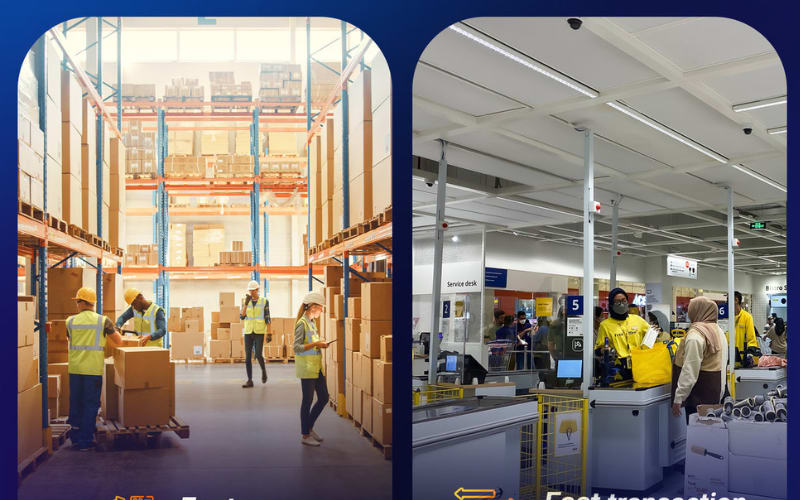
In warehouses, scanners handle inbound and outbound scanning, rack location, and picking tracking. Workers scan items as they move through docks or shelves. Industrial-grade scanners with strong Wi-Fi, wide-angle sensors, and long battery life keep operations smooth even in low light, large storage areas, or cold environments.
In manufacturing, scanners support parts tracking, assembly checks, and quality control. On fast conveyor belts or with reflective metal parts, consumer scanners often misread codes. Industrial scanners solve this with anti-glare imaging, high-speed decoding, and fixed-mount setups that capture barcodes in motion. This ensures accurate data flow and consistent product traceability.
In short, industrial barcode scanners keep both warehouses and production lines efficient — turning every barcode into data that drives precision and uptime.
What Is the Future of Industrial Barcode Scanners in Smart Factories?
Industrial barcode scanners are evolving into connected, intelligent systems that do far more than just read codes. They now function as Android-based mobile computers, combining scanning, data processing, and communication in one device. With AI-assisted recognition, scanners can identify faded, reflective, or complex barcodes faster and more accurately than ever before.
As smart factories adopt IoT, WMS, and ERP integration, scanners are becoming key data nodes — linking production lines, storage systems, and cloud platforms in real time. This connectivity allows factories to monitor performance, track materials, and manage operations with precision.
The next major shift is toward predictive maintenance and cloud analytics, where scanners detect wear, signal strength loss, or overheating before a breakdown occurs. This ensures uptime and protects productivity.
For businesses, the focus moves from short-term cost to long-term ROI — choosing devices that support upgrades, open SDKs, and ongoing firmware updates. In the future, barcode scanners will serve as the backbone of intelligent manufacturing — transforming every scan into actionable data for smarter, faster, and more reliable operations.
Building a Smarter, Connected Future with Tera
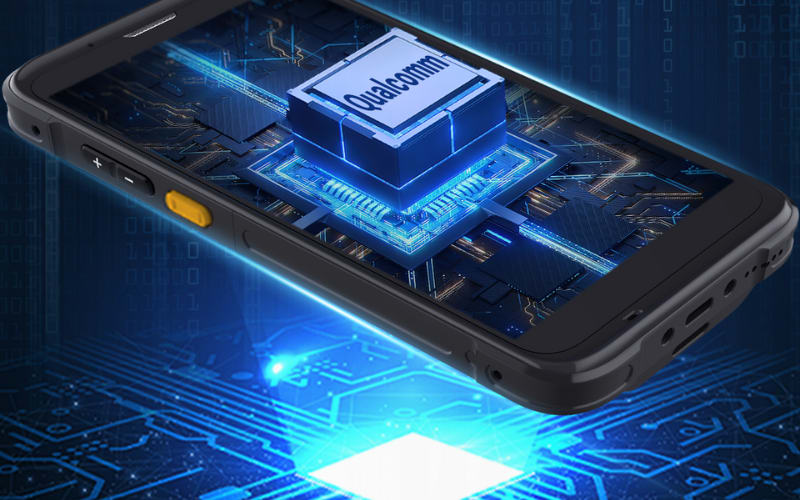
The future of industrial barcode scanning is all about connection — linking data, people, and machines in real time. As factories move toward smarter systems, choosing scanners that grow with your operation matters most. Tera’s Android-based barcode scanners combine rugged design, open SDKs, and powerful decoding to fit seamlessly into your workflow. Discover how Tera can help your business build a faster, smarter, and more connected operation.