Ever wondered why some “rugged” barcode scanners break after just one fall? In fast-moving warehouses and retail floors, one drop can mean lost data, lost time, and higher repair costs. Many buyers still choose devices by marketing words instead of real drop test standards, and the result is frustration.
This guide explains how drop tests prove true durability. You’ll learn what a drop test is, which standards matter (like MIL-STD-810, ASTM, and ISO), how to read height, surface, and drop counts on a spec sheet, and how these numbers connect to real-world use. With examples from Tera rugged Android barcode scanners and mobile computers, you’ll see how to choose a device that’s tested, proven, and ready for your work.
What Is a Drop Test and Why Does It Matter for Android Barcode Scanners and Mobile Computers?
A drop test is a test where you let a device fall from a set height and then check if it still works. It matters for an Android barcode scanner or mobile computer because these devices are used in busy places and will be dropped in real life.
What is a drop test?
A drop test has three simple parts:
- Set a height that copies real use, for example 1.2 m or 1.5 m
- Drop the device in a controlled way from that height to a hard surface
- Check the device after each fall for damage and basic function
In this test, people look at cracks, loose parts, screen damage, and failures in power, touch, or scanning. The goal is to see how the device handles impact and shock.
Why does it matter for Android barcode scanners and mobile computers?
These devices work in warehouses, stores, trucks, and factories. Floors are often concrete or tile. You move fast, carry boxes, and scan many codes. Drops are normal, not rare.
A clear drop test result tells you how likely the device is to keep working after these falls. It helps you judge if a scanner or mobile computer is rugged enough for your daily work, before you put it into the field.
 What Are Drop Test Standards and How Do They Guide Rugged Device Design?
Drop test standards are shared rules that say how to drop a product and how to decide if it passed or failed. They turn a simple idea, “let us drop it and see,” into a clear, repeatable test that different labs and makers can follow.
A drop test standard usually tells you:
- Drop height: from what height the product must be dropped
- Surface type: what kind of floor or plate it must hit
- Number of drops: how many times the test must be done
- Sides and corners: which faces, edges, and corners must be tested
- Pass or fail rules: what level of damage or failure is allowed
For a rugged Android barcode scanner or mobile computer, these standards act as a design target. Engineers know from day one, “this device must survive a certain drop height and a certain number of drops.” That guides choices in:
- Housing and frame design, for example thicker shells or inner frames
- Internal layout, such as how to support the battery, board, and scan engine
- Material selection, like using rubber, shock pads, and stronger plastics
For you as a user, drop test standards turn marketing words into numbers. Instead of only reading “rugged” or “strong,” you can see clear test levels. This helps you compare different devices in a fair and simple way and pick the one that fits your real work risks.
Which Drop Test Standards Are Most Important for Rugged Android Barcode Scanners and Mobile Computers?
For rugged Android barcode scanners and mobile computers, the key drop test standards are device level tests like MIL-STD-810, plus packaging tests like ASTM and ISTA. The device standard helps you know if the scanner can survive daily falls. The packaging standards help the device reach you safely during shipping.
How Do MIL-STD-810G and 810H Drop Tests Protect Rugged Android Devices?
MIL-STD-810G and MIL-STD-810H are United States military test standards that include drop and shock tests for electronic devices. Many makers use these methods when they build rugged Android barcode scanners and mobile computers.
In a typical MIL-STD-810 style drop test, the standard will set:
- Drop height, for example 1.2 meters, 1.5 meters, or sometimes 1.8 meters
- Number of drops, often many times so the device takes repeated shock
- Orientations, such as different faces, edges, and corners of the device
- Surface, often a very hard base similar to concrete
If a rugged device is tested using MIL-STD-810G or 810H drop procedures, it means the design was checked against strong impact from hand height in real work. This does not promise that a device will never break, but it gives you a clear, shared level of drop resistance for warehouse, retail, and field use.
What Packaging Drop Test Standards (Like ASTM or ISTA) Still Matter for Shipping Devices Safely?
ASTM and ISTA drop test standards are used mainly for packaging, not for the device body itself. They set how to drop shipping cartons, inner boxes, and packed products to copy shocks in trucks, planes, and parcel networks.
These standards link carton weight to drop height and number of drops, and they define which corners and edges of the box must be tested. When a device ships in packaging designed with ASTM or ISTA drop tests in mind, it is less likely to arrive damaged because of rough handling on the way.
In this industry, rugged Android barcode scanners are often tested with drop heights and methods similar to the MIL-STD-810 standards—typically around 1.2 to 1.8 meters on concrete. Devices like Tera’s P400 and P166GC follow this level of testing and are also packed in boxes designed under ASTM or ISTA style drop standards. Together, these tests show how the product can withstand real-world handling and transport conditions.
How Does a Standard Drop Test Work for a Rugged Android Barcode Scanner or Mobile Computer?
In a standard drop test, a rugged Android barcode scanner or mobile computer is dropped many times in a controlled way, and then checked to see if it still works. The steps follow the chosen drop test standard, so the test is clear and repeatable.
Step 1: Set the test conditions
- Choose the test units: The devices are set up like real use, with battery, covers, and settings ready.
- Set the drop height: A common height is 1.2 m or 1.5 m, close to hand or chest height in work.
- Choose the test surface: This is usually a hard base, for example concrete or steel with a thin top layer.
Step 2: Plan the drop directions
The test team marks the faces, edges, and corners of the device. The standard says which orientations must be used and how many drops are needed.
Step 3: Drop the device
The device is held in a simple rig or arm. It is released from the set height so it falls freely, the same way each time. This is done again and again until all planned drops are finished.
Step 4: Check the device after drops
After the drops, several things are checked:
- Outer shell and corners: cracks, open gaps, loose parts
- Screen: broken glass, dead lines, touch not working
- Power and system: can it still turn on, stay on, and respond
- Barcode scanning: can it still scan barcodes quickly and read them right
- Connections: Wi Fi, Bluetooth, or cellular if the device uses them
These checks answer the hidden question: “What needs to be checked with a drop test?” So when you see a spec that talks about a 1.5 m drop test for a rugged Android scanner or mobile computer, this is the kind of process that stands behind that number.
What Do Drop Height, Number of Drops, and Surface Type Really Mean in Device Specs?
In product specs, numbers like “1.5 m, 26 drops, concrete floor” describe how hard a device was tested. Each part—drop height, number of drops, and surface type—tells you a different piece of the story.
Drop height: This shows how far the device fell in the test.
Common heights are:
- About 1.0 m – waist level, light risk.
- 1.2 to 1.5 m – hand or chest level while scanning; most tests use this.
- 1.8 m or higher – above head or shelf level, very hard impact.
Higher numbers mean stronger shock and tougher tests.
Number of drops: This is how many times the device was dropped in one test.
A higher drop count checks long-term toughness, not just luck on one fall.
For example:
- 1.5 m, 2 drops = basic demo.
- 1.5 m, 26 drops = realistic daily use.
More drops show the device can take repeat shocks over time.
Surface type: This means what the device hit.
- Concrete floor – very hard, common in warehouses and loading areas.
- Plywood on steel – some cushion, still strong impact.
- Rubber mat or pad – softest, least shock.
The same height gives very different risk on each surface.
When you read specs, look at all three together. A device rated 1.5 m, 26 drops, concrete faced much tougher tests than one that only says 1.5 m drop. Reading the full line helps you understand what those numbers really mean for your rugged Android barcode scanner or mobile computer.
Why Do Rugged Android Barcode Scanners Need Stronger Drop Test Standards Than Normal Phones?
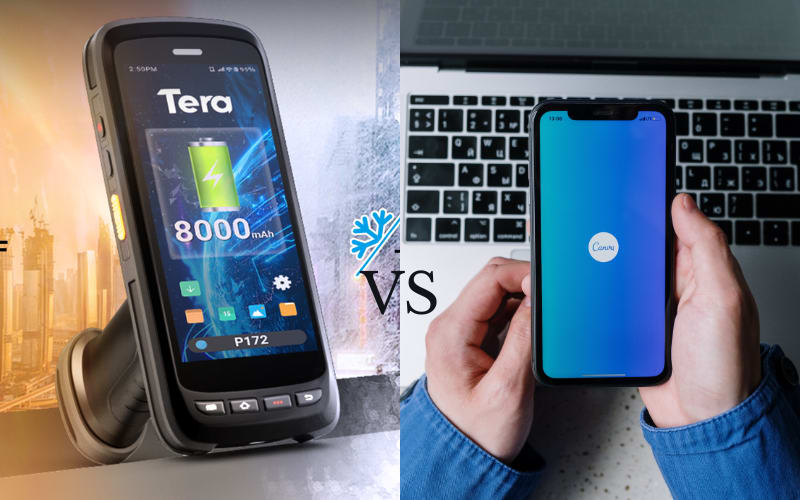
Rugged Android barcode scanners need stronger drop test standards because they work in harder, riskier places. A warehouse, factory, or delivery site is not like an office or home. Devices in these spaces face concrete floors, fast movement, and daily impact.
Normal phones are made for light daily use. They work well in clean, calm settings but fail fast in rough jobs. Common problems include:
- Cracked screens after one or two drops
- Power loss or restart after impact
- Dust or moisture getting into buttons or ports
- Weak batteries in hot or cold air
In field or warehouse work, even a small break can stop scanning and delay orders.
Rugged Android barcode scanners and mobile computers are built to handle what phones cannot. They go through much tougher drop test standards that check:
- Higher drop heights—often 1.5 m or more
- More drops—many repeated impacts
- Harder surfaces—like concrete floors
- Extra tests—for temperature, dust, and humidity
These tests copy real warehouse and logistics conditions so the device stays ready all day.
Buying a rugged Android scanner is not about paying more for looks. It means choosing a tool that follows clear, proven durability standards—a tool that can match the real world where you work.

How Can You Read Drop Test Standards on a Spec Sheet When Choosing an Android Barcode Scanner?
When you choose an Android barcode scanner, the drop test line on the spec sheet shows how tough the device really is. Words like rugged sound nice, but numbers and standards tell the real story. A clear drop test spec helps you see if the device can handle your work environment.
Look for these words in the spec sheet:
- Drop test / Drop resistance – confirms the device was physically tested.
- MIL-STD-810G or MIL-STD-810H – means the test followed a known method.
- Drop height – values like 1.2 m, 1.5 m, or 1.8 m show how far it was dropped.
- Surface type – phrases such as “to concrete” or “to plywood” tell you how hard the impact was.
- Number of drops – for example, 20 or 26 times, showing repeated tests for durability.
How to tell if the drop spec is reliable:
A solid spec includes height, number of drops, surface, and the test standard. Example of a clear line: “1.8 m, multiple drops to concrete, IP67 rated.” If a brand only says “rugged 1.5 m drop”, that gives little detail and no proof of standard testing.
For example:
The Tera P166GC lists multiple 1.8 m (5.9 ft) drops to concrete and IP65 sealing.
The Tera P172 lists multiple 1.5 m (4.9 ft) drops to concrete with IP65 protection.
The Tera P400 lists multiple 1.8 m (5.9 ft) drops to concrete and IP67 sealing.
These complete specs show the drop height, test count, surface, and sealing level—exactly what you should check before choosing a rugged Android barcode scanner.
How Do Drop Test Standards Connect to Real Life in Warehouses, Retail Stores and Field Work?
Drop test numbers describe real moments that happen every day at work. They show how a device reacts when it slips, bumps, or falls in your hands.
In warehouses, scanners often fall from shelves or while picking orders. When you reach for a box, move quickly, or turn with a full cart, a device can slide from your hand. A 1.5 m drop is about the same as a fall from your waist to a hard concrete floor—a common warehouse surface. That is why rugged Android barcode scanners are tested for this height and for many repeated drops.
In retail stores or back rooms, scanners may fall during checkout or restocking. The floor is usually tile or concrete, and drops happen several times a day. A reliable spec such as “1.5 m, 20 drops to concrete” means the device can survive the kind of small accidents that happen during fast sales or shelf work.
In field work and logistics, devices face trucks, docks, and moving vehicles. They can fall while loading boxes, stepping off a lift, or during vibration on the road. Tests for higher drop heights and wide temperature ranges mirror these tough outdoor conditions.
Drop test standards turn lab data into real-world protection. Choosing the wrong device can lead to cracked screens, work delays, and lost time—proof that those numbers on a spec sheet truly matter.
What Are Common Mistakes When People Think About Drop Test Standards for Rugged Barcode Scanners?
Many people look at drop test numbers but miss what they really mean.
Here are some common mistakes — and how to understand the standards the right way.
Mistake 1: Only watching a short drop video
A short clip that shows a device falling once looks great, but it is not a real test. It does not tell you the height, surface, or number of drops. True drop test standards use fixed rules so every lab can repeat the same test and compare results.
Mistake 2: Looking only at drop height
A spec that says “1.5 m drop” can mean many things. One drop on wood is very different from 26 drops on concrete. Always read the full line — height, surface, and number of drops together tell the full story.
Mistake 3: Confusing device drop tests with packaging tests
ASTM or ISTA standards are for shipping boxes, not the device itself. A package that passes those tests protects the box during transport, not the scanner’s body during daily work. Check that your Android barcode scanner lists a device-level drop spec like “1.5 m to concrete.”
Mistake 4: Ignoring real work conditions
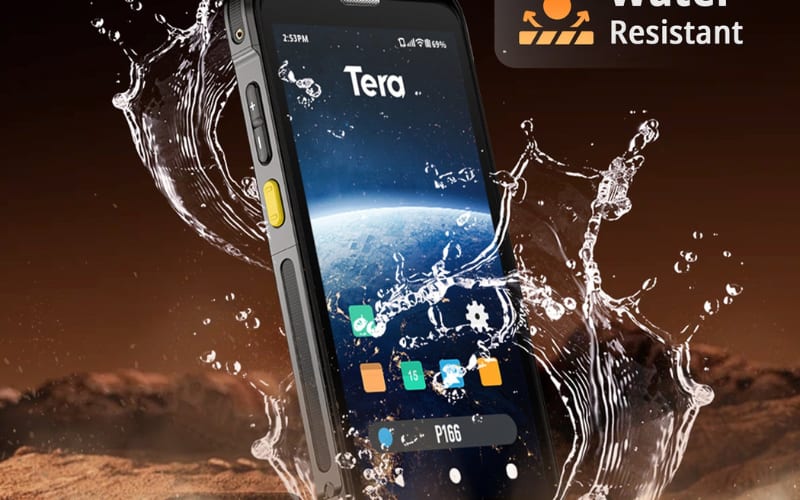
Drop results mean little if the device fails under heat, cold, dust, or moisture. Choose scanners that match your site — for example, IP65 or IP67 sealed for dusty or wet spaces.
Drop test standards are not just numbers — they are design promises. Reading them fully helps you pick a rugged scanner that truly fits your job.
What Is the US Military Standard for Drop Test?
The main U.S. military standard for drop tests is MIL-STD-810, used in both G and H versions. It explains how to test rugged Android devices for drops, shocks, and vibration. Most rugged barcode scanners follow Method 516, which checks repeated drops from about 1.2–1.8 m to hard floors like concrete.
What Is the ISO Standard for Drop Test?
The ISO standards for drop tests mainly cover packaging, not devices. Common ones include ISO 2248 and ISO 2876, which measure how boxes protect products during shipping. They help ensure packaging strength, while device durability is usually tested under MIL-STD-810 methods.
What Is the ASTM Standard for Drop Test?
ASTM drop test standards focus on packaging and shipping safety. Examples include ASTM D5276 and ASTM D880, which simulate how packages fall during handling and delivery. Device makers like Tera use these methods to design boxes that protect rugged scanners on the way to customers.
How Many Drops Are Usually Done in a Device Drop Test?
Most rugged device tests include 20 – 30 drops from the set height. The device is dropped on faces, edges, and corners to check total resistance. If it still works after all drops, it passes the test.
What Needs to Be Checked After a Drop Test for an Android Barcode Scanner?
After each drop, testers look at:
- Body and screen – cracks, gaps, or loose covers
- Power and function – can it start and stay on
- Scanning and keys – does the barcode reader still work correctly
These checks prove whether the rugged device still performs as designed.
Choose Rugged Devices Tested for the Real World
Drop test standards are more than numbers — they are proof of trust in real work. When you understand what “1.5 m, 26 drops, concrete” really means, you can choose a device with confidence, not guesswork.
At Tera, every rugged Android barcode scanner is tested with multiple drops to concrete and sealed to IP65 or higher, following the same principles found in MIL-STD-810 methods. These tests are done so your device keeps working — on the floor, in the truck, or in the field.
If you want scanners built for real-world use, see Tera’s full line of rugged Android barcode scanners and mobile computers. They are tested, proven, and ready for the work you do every day.